


When Patagonia dropped the Hi-Loft Nano Puff, it felt like their answer to the common question: Can you get down-sweater warmth without down?
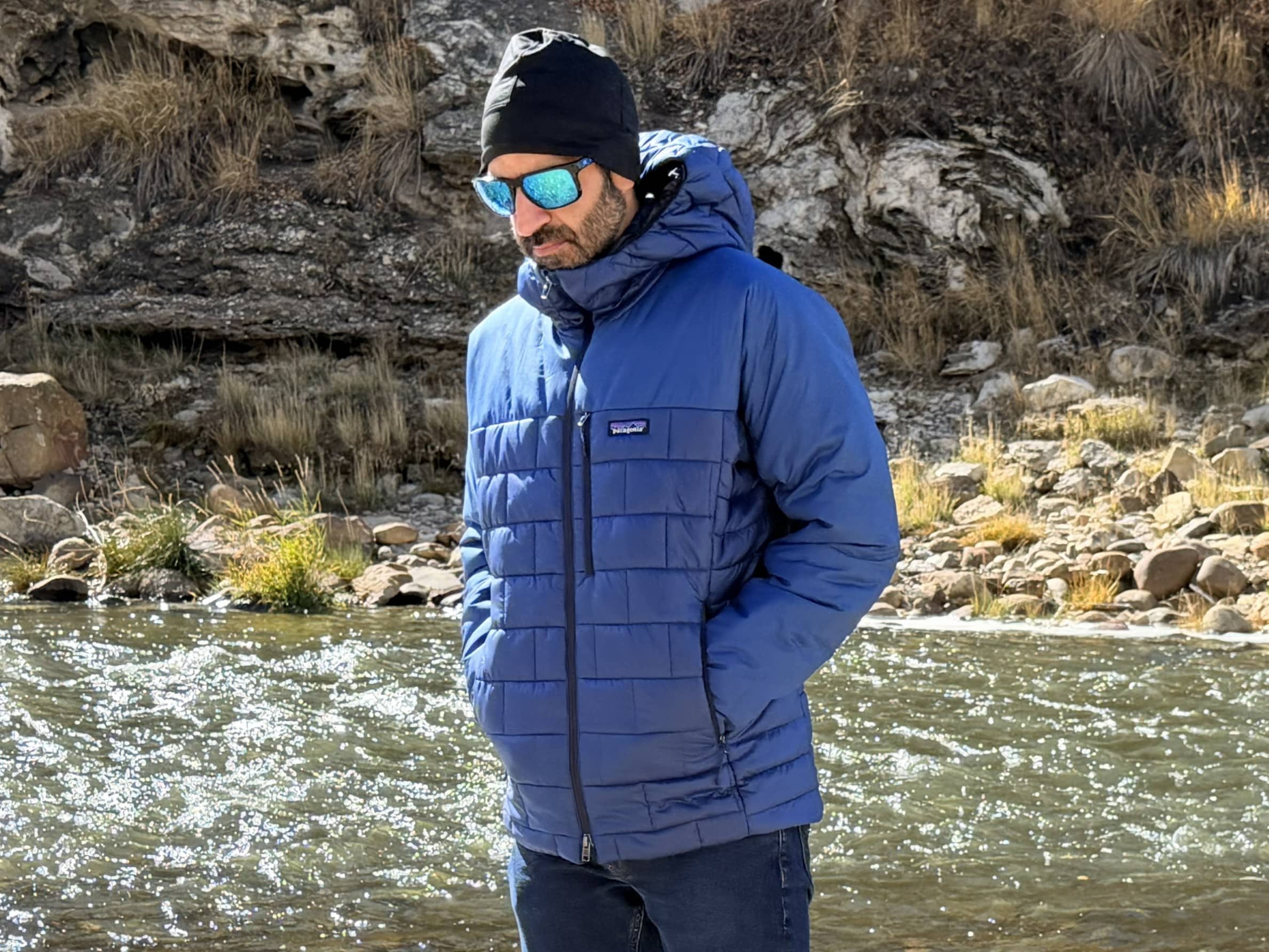
Clear, cold, and windy. The Hi-Loft Nano Puff Hoody comes into play when you need more than an ultralight jacket.
Bottom Line
The Hi-Loft Nano Puff Hoody is the warmest, most rugged synthetic in Patagonia’s lineup. It’s essentially the Down Sweater’s synthetic twin—ideal when you need reliable warmth and durability in damp or unpredictable weather.
If you’re looking for a synthetic jacket that performs like down but doesn’t fear moisture, the Patagonia Hi-Loft Nano Puff Hoody is a great choice. It’s mid-weight but robust—more warmth than a Nano or Micro Puff, tougher than a Down Sweater, and perfect for cold, high alpine conditions.
Patagonia Hi-Loft Vs Nano Puff and others
| Model | Patagonia Warmth Rating | Weight | Price |
|---|---|---|---|
| Nano-Air Hoody | 28 | 401 g (14.14 oz) | $329 |
| Micro Puff Hoody | 31 | 298 g (10.5 oz) | $329 |
| Nano Puff Hoody | 34 | 400 g (14.1 oz) | $289 |
| DAS Light Hoody | 40 | 346 g (12.2 oz) | $349 |
| Hi-Loft Nano Puff Hoody | 43 | 760 g (26.8 oz) | $329 |
| Down Sweater Hoody | 43 | 420 g (14.8 oz) | $329 |
| DAS Parka Hoody | 57 | 556 g (19.6 oz) | $449 |
Vs Nano Puff / Micro Puff: The Hi-Loft is warmer, tougher, and built for colder conditions. It’s the “serious cold” version of the Nano line.
Vs Down Sweater: In dry cold, the Down Sweater is lighter and more compressible, but the Hi-Loft holds its own in warmth and wins outright in damp conditions.
Vs Nano-Air: The Nano-Air breathes far better for active pursuits but isn’t nearly as warm.
The Patagonia Hi-Loft Nano Puff is also much bulkier than any of these jackets. The Nano Puff, Micro Puff, and Down Sweater feature stash pockets. There is no way you are stuffing the Hi-Loft into a pocket and Patagonia does not include a double sided zipper on any pocket here. It would be nice if they included a stuff sack, but it is easy enough to get one separately for the few people would would actually use one.
If you are debating between Patagonia jackets, we have a few other articles that may help:
Patagonia Micro Puff vs Nano Puff
Patagonia Nano Puff, Micro Puff, and Down Sweater
Hi-Loft Strengths & Weaknesses
Pros
Cons
At a glance
Patagonia Hi-Loft Nano Puff Hoody - Men's and Women's
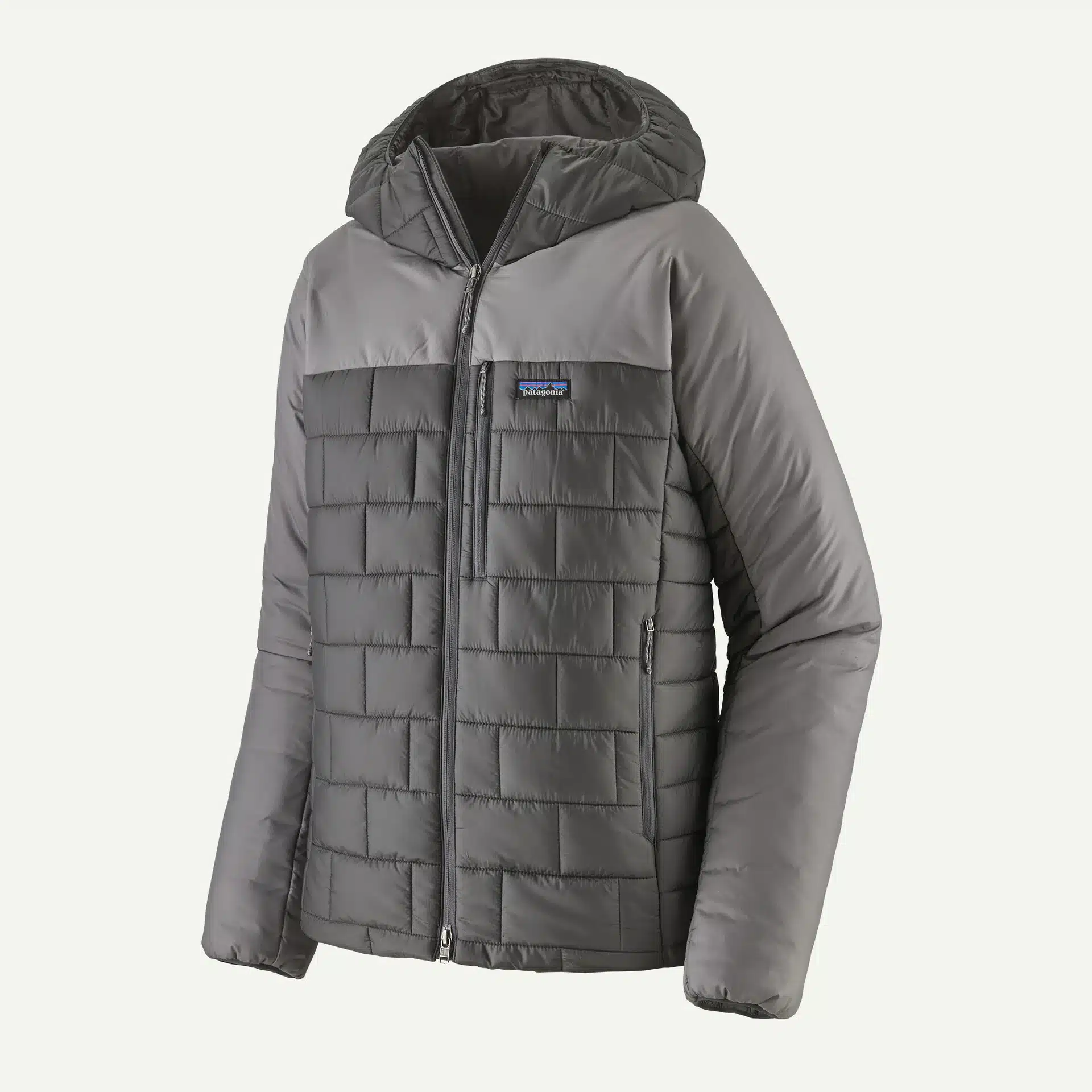
The men's Patagonia Hi-Loft Nano Puff Hoody in Forge grey.
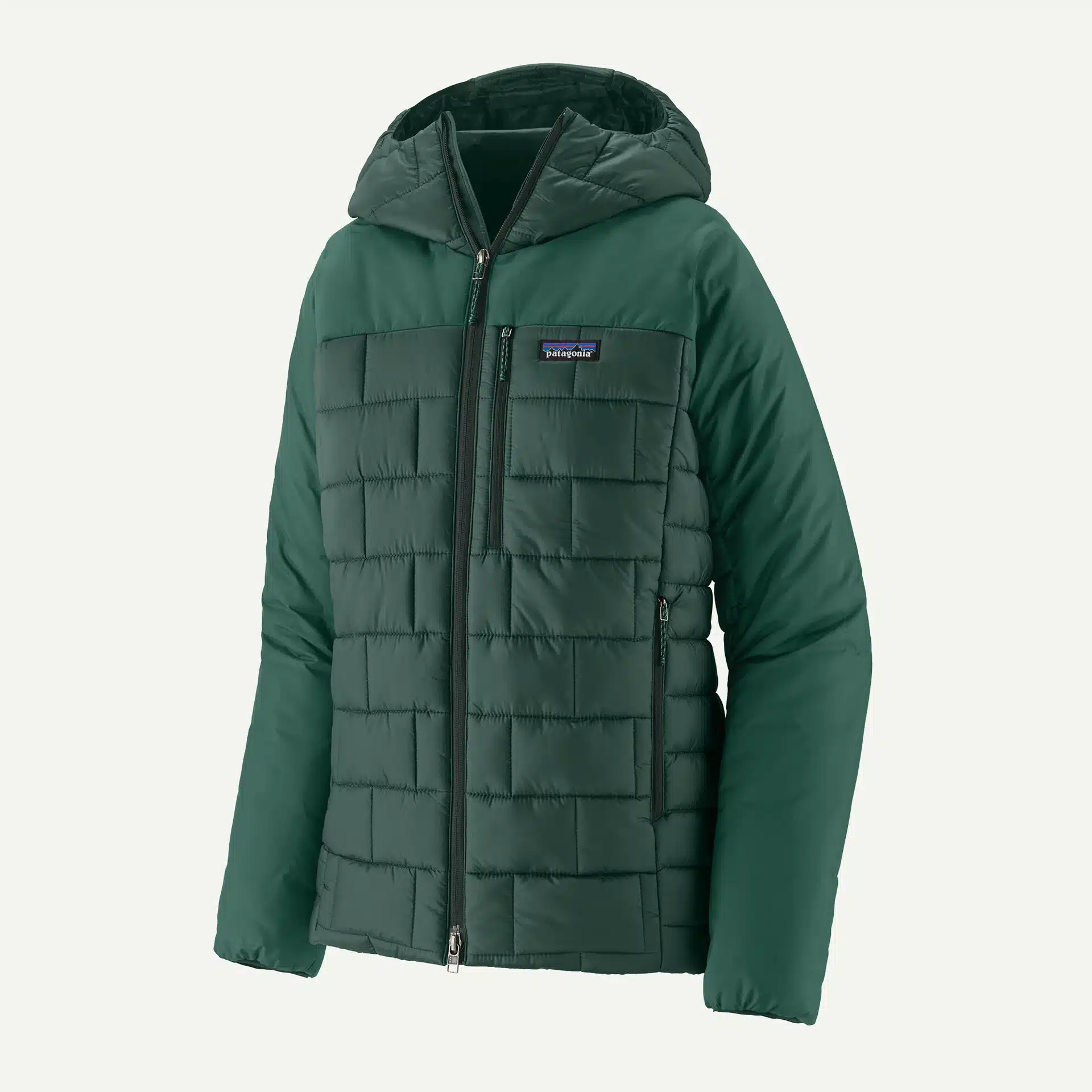
The women's Patagonia Hi-Loft Nano Puff Hoody in Cascade green.
Patagonia Hi-Loft - Materials & Construction
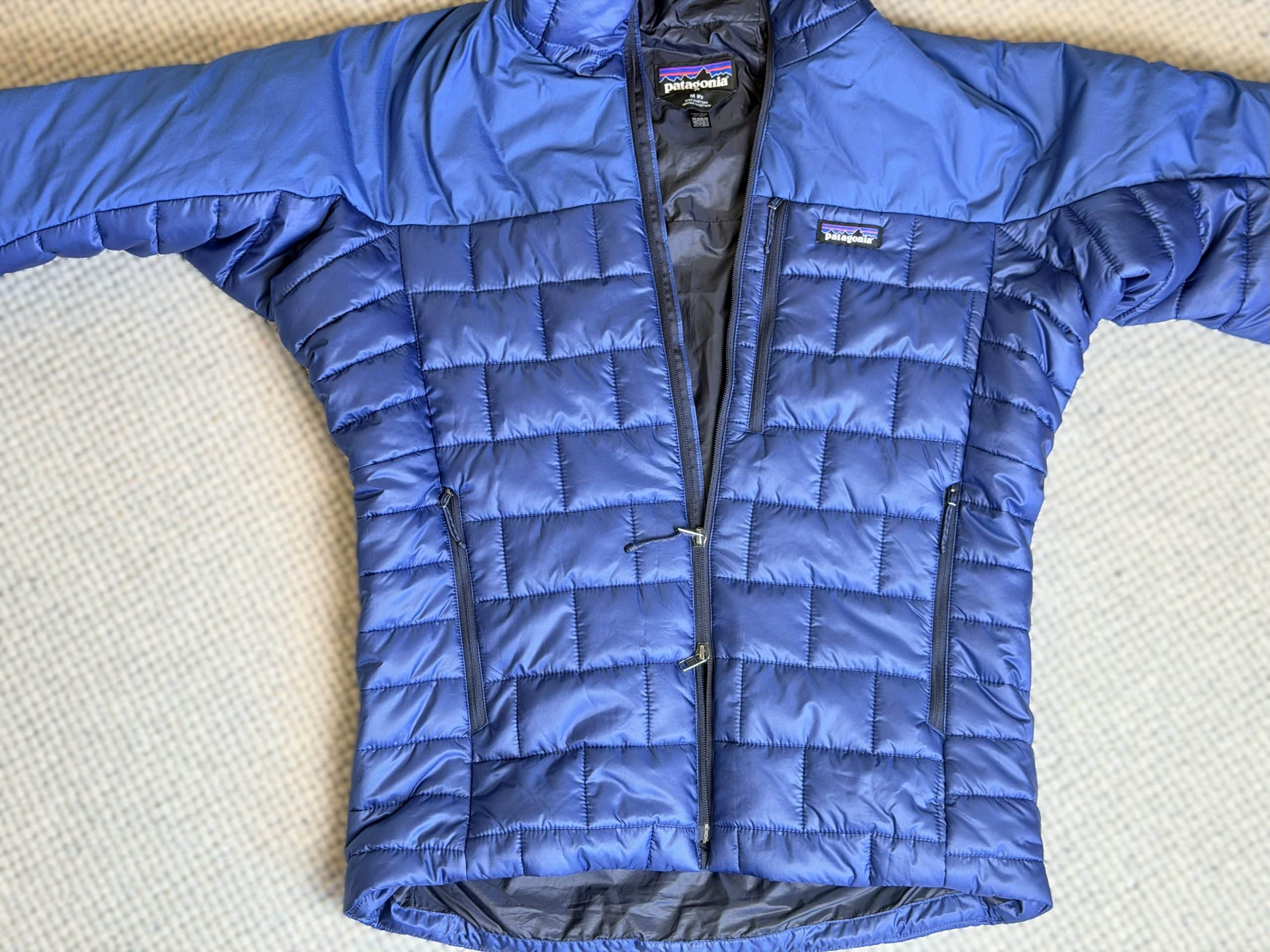
The Patagonia Hi-Loft has the classic quilting of the Nano Puff, with a heavier fabric on the shoulders and across the arms. It also features a 2-way zipper for use on belay.
The construction of the Hi-Loft is based on the classic Nano Puff, but like everything on this jacket it has been made burlier for harsh conditions. It uses a 4-inch brick quilting on the chest, back, and hood, with horizontal quilt side panels to minimize cold spots and stabilize insulation. The quilted face fabric is 1.4-oz 20-denier 100% recycled polyester ripstop. Across the shoulders and arms there is 2.2-oz 50-denier 100% recycled polyester ripstop, which significantly increases abrasion resistance. It also gives the jacket a distinguishing two-tone look. Zipper size and hardware are the same YKK coils as the standard Nano Puff, but the main zip on the Hi-Loft is two-way, presumably for climbers out there. I've always appreciated the the metal YKK#5 zipper pulls; they're smoother and snag less than smaller zips.
Hood
The hood is helmet compatible and so it pretty big when aren't wearing one. That said, the single-point adjustment is sufficient to keep the hood out of your eyes and lock in warmth when you aren't wearing a lid.
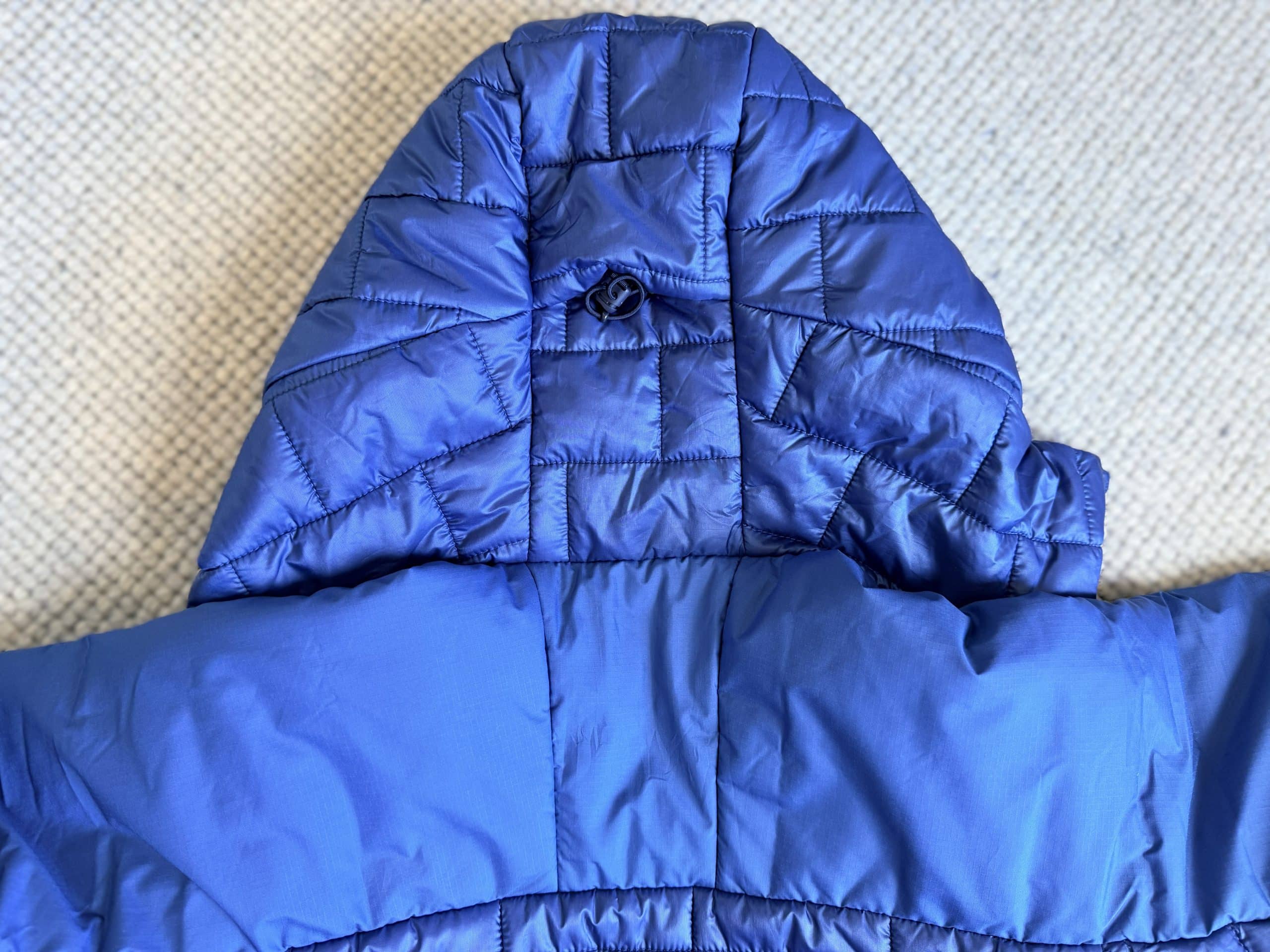
The single point adjustment is enough to cinch the hood when not wearing a helmet.
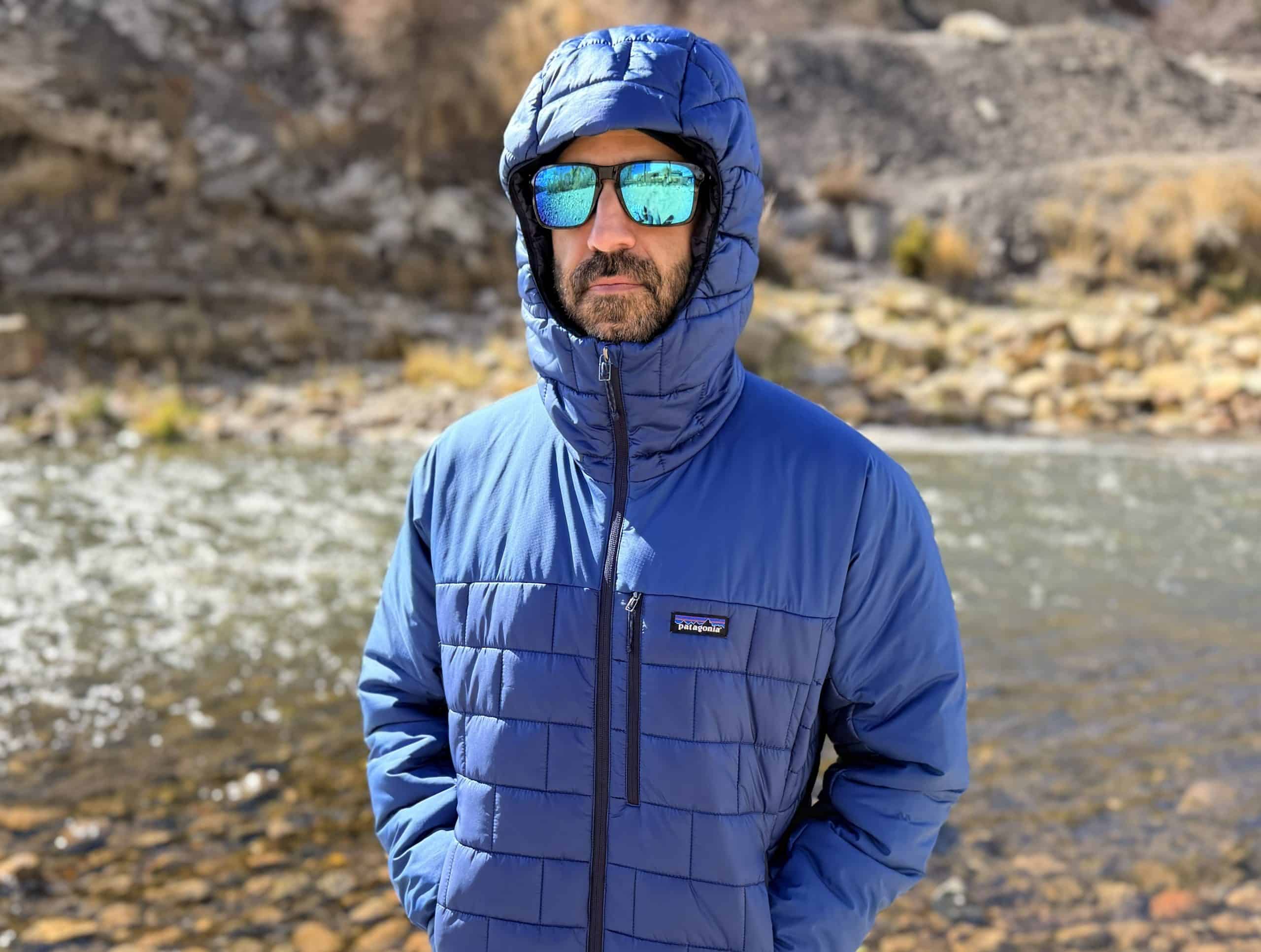
I can adjust the hood nicely to keep it out of my face. It is noticeably more insulated than a standard Nano Puff.
Pockets
On the exterior there are two zippered hand warmer pockets and one zippered chest pocket. On the inside of the jacket are two dump pockets for stashing gloves or other light items. Unfortunately, the hand warmer pockets have a standard tricot lining, compared with the fleece lining on something like the Arc'teryx Atom SV (see my full look at the Atom SV here). I think lined pockets make a big difference in cold weather.
Cuffs
One other thing I'll highlight is the simple cuffs on this jacket. They're comfortable enough, but I think that as a cold weather outer layer this jacket would benefit from a more substantial cuff. Some jackets in this category have a gasket cuff with overhanging insulation, which I think works better with gloves than what the Hi-Loft Nano Puff offers.
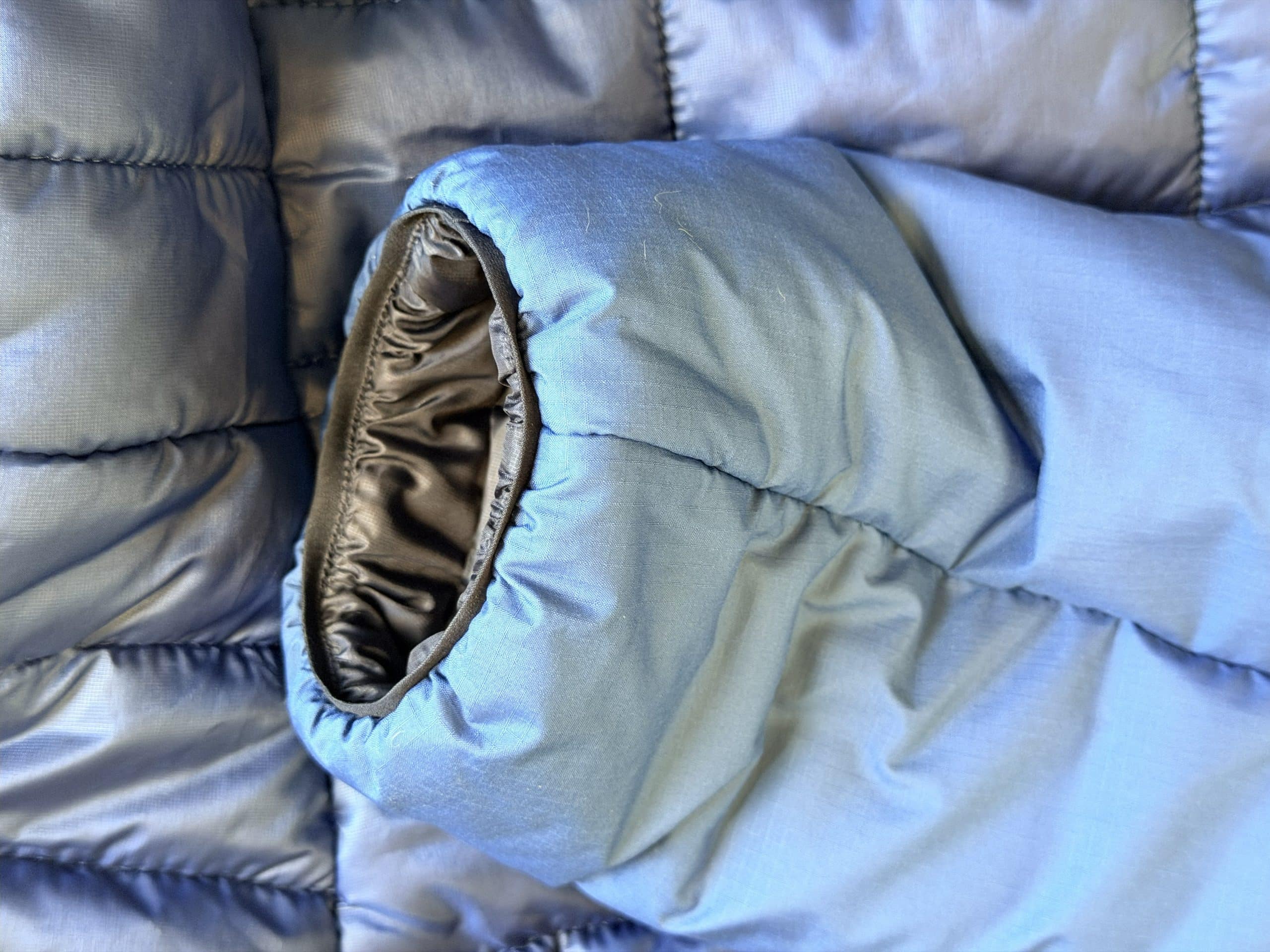
Personally, I'd like to see a more substantial cuff to lock in warmth.
Patagonia Hi-Loft - Warmth & Breathability
The Patagonia Hi-Loft Nano Puff is in a different league than the standard Nano Puff when it comes to warmth. The Hi-Loft uses 200 g/m² PrimaLoft® Silver Eco 100% postconsumer recycled polyester insulation on the body and hood, with 170 g/m² under the arms and side body. This is compared with 60 g/m² insulation on the standard Nano Puff. This insulation puts the Hi-Loft Nano Puff on par with the Patagonia Down Sweater for warmth. You can wear this jacket down into the teens Fahrenheit.
With the increased warmth comes less breathability. This jacket is not intended for high output activities, so this is more just an objective observation than criticism. You'll cook in this if you are doing anything more than standing on belay or hiking in cold weather. Because it uses the same light fabric as the Nano Puff in the core, it remains comfortable and breathable enough for casual wear and any time you are standing or working in cold weather (shoveling, chopping wood, camping, traveling, etc...). It's not for uphill exertion.
If you want something for ski touring or running then you should look at the Patagonia Nano-Air (review here) and Nano-Air Ultralight. Check out my recent review of the Patagonia Nano Air Ultralight, which has become one of my favorite jackets for hard activity.
Weather Resistance
The Hi-Loft is windproof and water resistant. It has Patagonia's DWR coating which does not contain any intentionally added PFAS (that's legal-speak for PFAS-free). It isn't waterproof, but the coating does an admirable job of shedding water in a light rain or wet snow. The synthetic insulation will retain warmth even when wet. This is a distinct advantage over Patagonia's down jackets as they don't use hydrophobic down, which can be found in competitors such as the Stio Hometown Down (see my review and video here). That said, no one wants to be in a wet jacket in cold weather, so throw a shell over it for extended precipitation but make sure it has pit zips, as you'll be cooking unless it is very cold out.
FAQ - Patagonia Hi-Loft Nano Puff
How warm is the Patagonia Hi-Loft compared to the Nano Puff?
It’s a full step warmer and as warm as the Patagonia Down Sweater. The 200 g PrimaLoft® Silver insulation makes a major difference.
Is the Patagonia Hi-Loft waterproof?
No, but it has a strong DWR coating that sheds light rain and snow. For sustained moisture, layer a shell over it.
How does the Patagonia Hi-Loft perform when wet?
Like all jackets the Hi-Loft has a DWR coating, which will shed a light amount of water. If you are out long enough that the jacket gets wet, the synthetic insulation will perform better than down. It keeps you warm when damp, though you’ll still want a shell in sustained rain.
How packable is the Patagonia Hi-Loft?
It compresses reasonably for the warmth it provides, but is bulkier and not as small as the Nano or Micro Puff. It’s better as your main insulation layer than a backup.
What’s the best layering setup for the Patagonia Hi-Loft?
A base layer or light fleece underneath works perfectly if it is below freezing. For long periods of snow, throw a hardshell on top. If it is warm enough that it is raining, then I think you'll get hot fast with a shell on top.
Does The Patagonia Hi-Loft fit true to size?
Yes and if you own any Patagonia then the fit of the Hi-Loft will be familiar. The regular fit allows comfortable layering. At 5’9” and 150 lbs, I wear a medium. I can almost get away with a small, but they are too tight at the shoulder.
Is the Patagonia Hi-Loft worth it if I already own a Down Sweater?
I'd say it depends what your core activities are. I mostly lean towards no on this, but if you do a lot of cold weather climbing, ice climbing, or camping in cold weather then the Hi-Loft would be a worthy addition to your gear stash. If you mostly need a good jacket for being outside in cold weather (hiking, chopping wood, around town) then I think you're good to go with your Down Sweater.
Check out our other content on jackets:
Guide: Insulated & Shell Jackets
Start here:


Also see: