


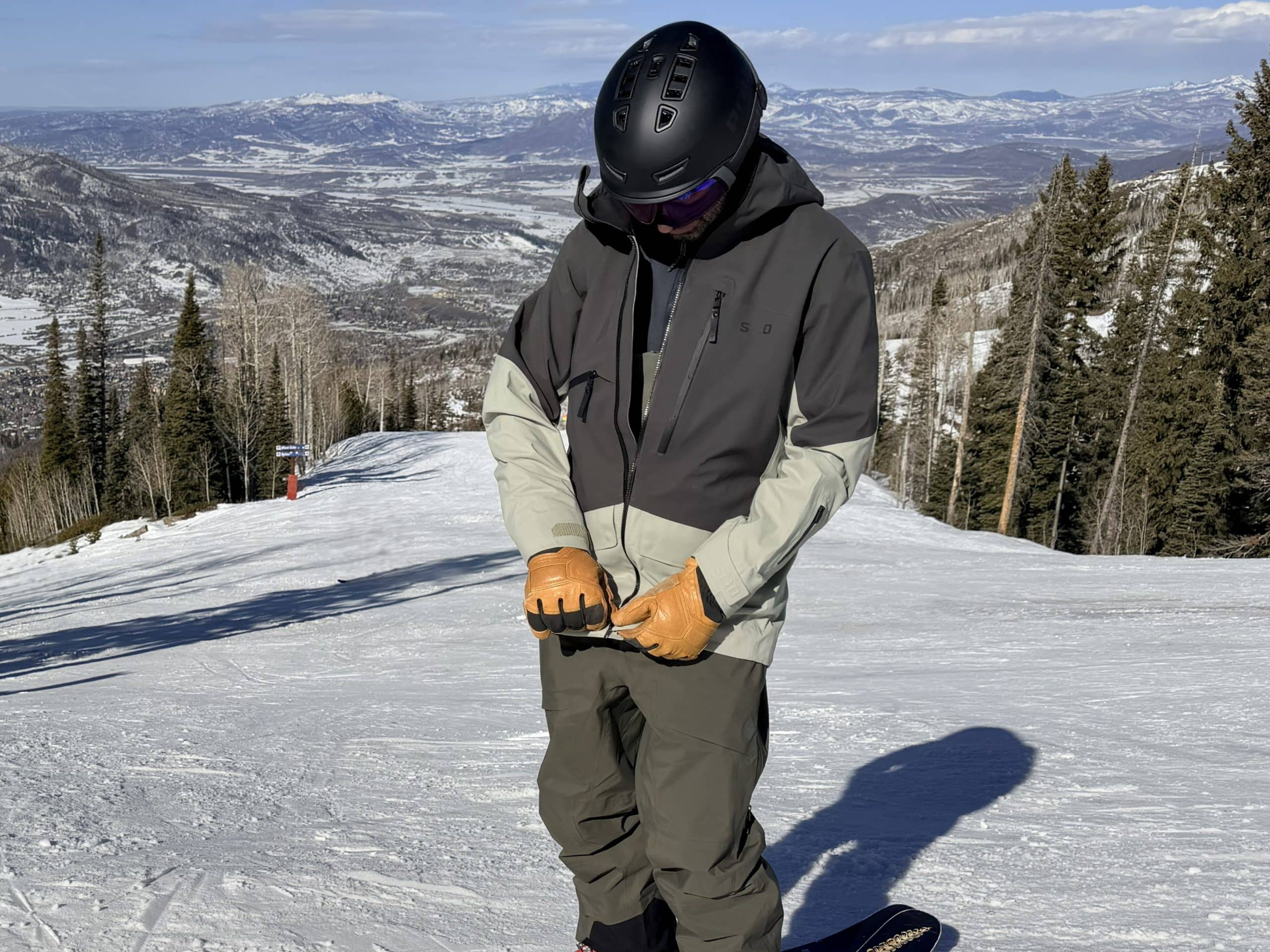
The Stio Figment freeride shell stands out as one of the top relaxed-fit jackets I've tested. It combines a genuinely tough build with thoughtful features and a modern freeride fit that looks as good as it skis.
This is not a lightweight touring shell, and it doesn’t pretend to be. The Figment is built for steep, deep, cold, and windy resort days, and it excels in that role.
I (5'9" / 150lbs) normally wear a size medium jacket, but sized down to a small for the Stio Figment given the long torso and relaxed fit. The Stio size guide is helpful, but realize that this jacket fits particularly large.
Bottom Line: Stio Figment
Target User: Resort shredders and knuckle draggers everywhere.
Overall Rating (1-5): 4.8
I didn’t think I could like a freeride jacket this much. It looks great and performs great. The stiff hood and large cuffs keep me from giving this jacket a perfect 5 star rating, but you won’t find anything out there with a higher build quality and features tailored to big mountain riders.
Pros:
Cons:
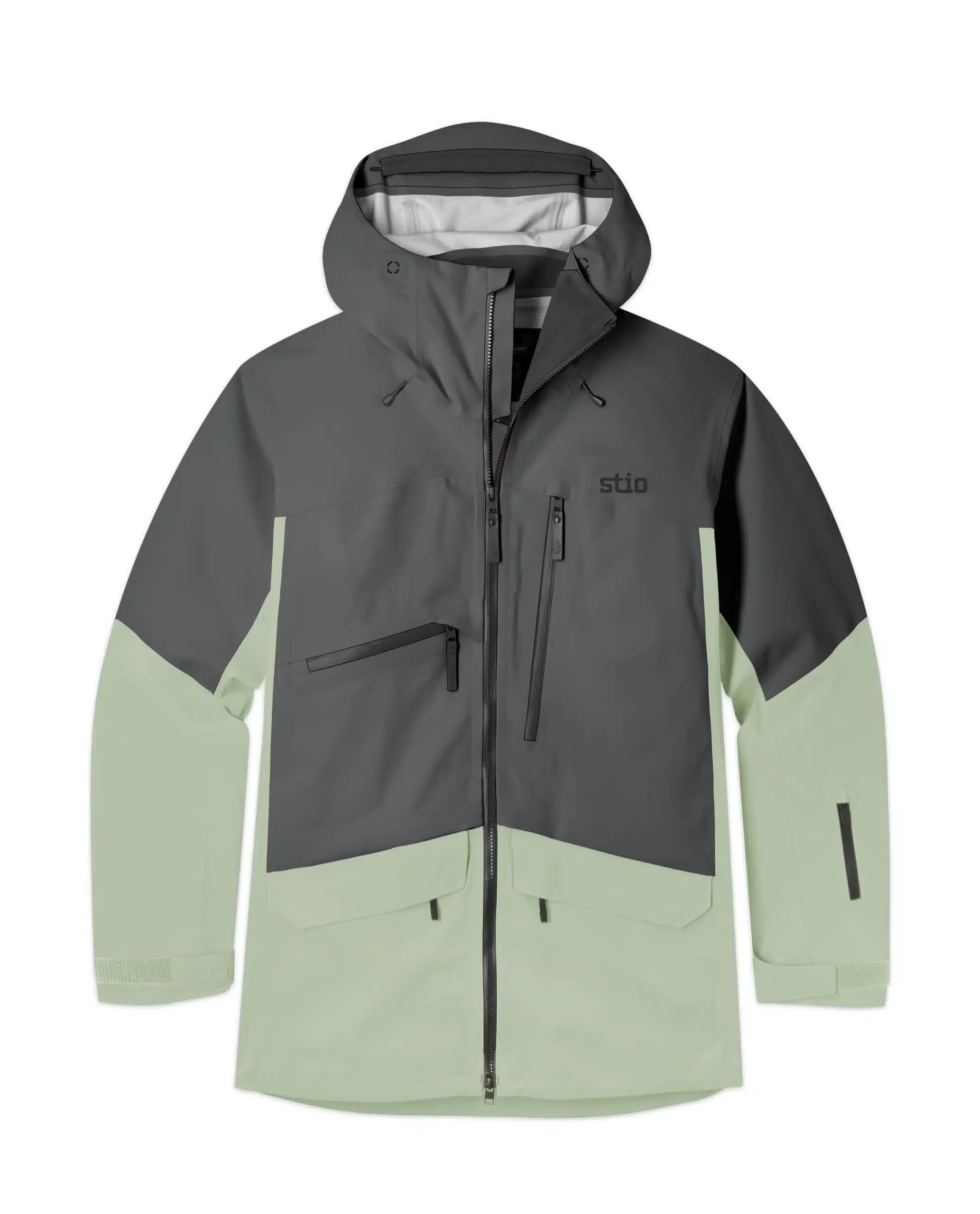
The men's Stio Figment jacket in Raven / Sage Flats
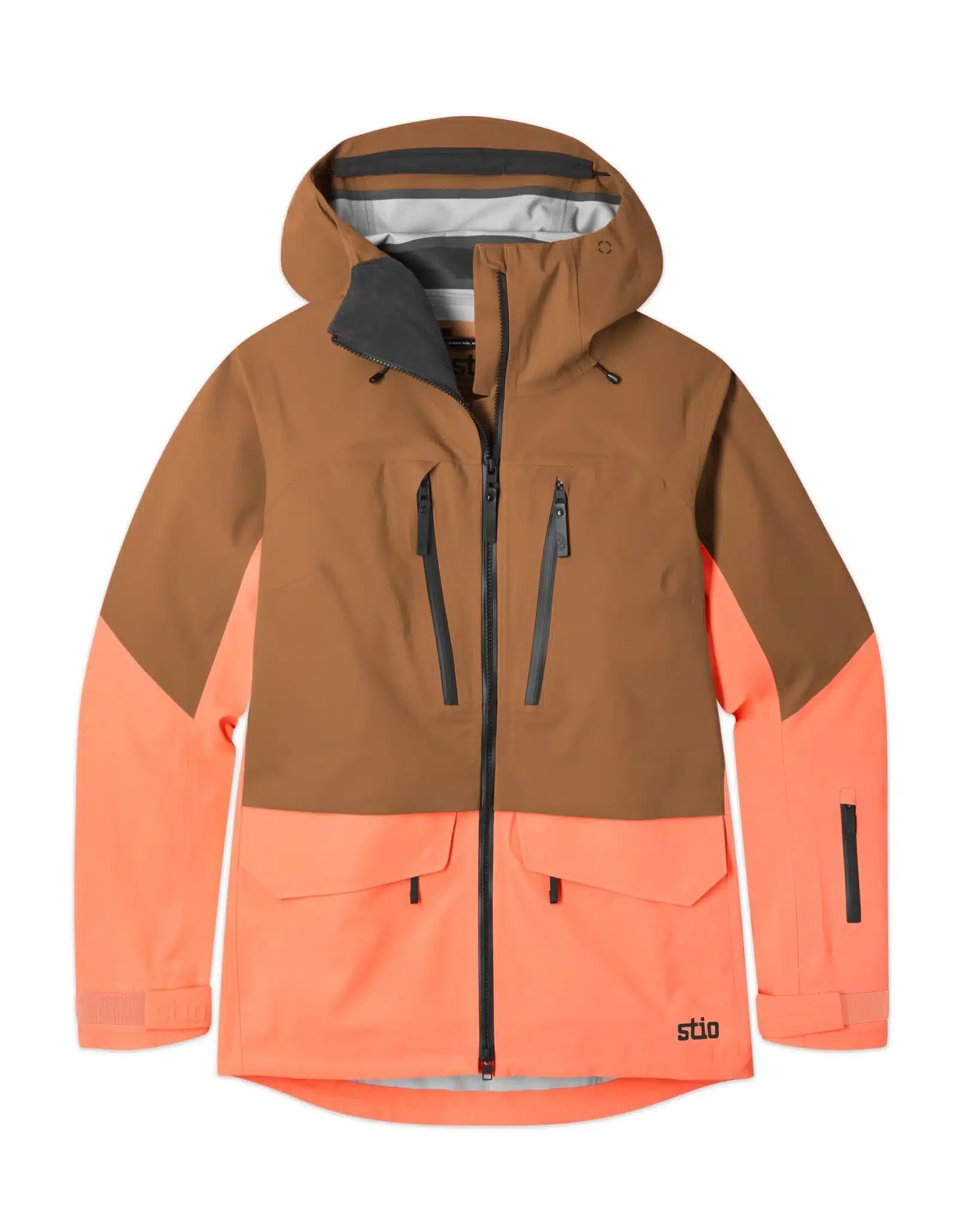
The women's Stio Figment jacket in Mustang / Neon Bloom
The Stio Figment is one of our favorite PFAS-free ski shells
| Model | Our review | Price | Fabric |
|---|---|---|---|
| Arc'teryx Incendia (women's) | Review | $900 | 80D GORE-TEX PRO ePE 3L |
| Arc'teryx Rush (men's / women's) | Review | $800 | 80D GORE-TEX PRO ePE 3L |
| Mammut Haldigrat (men's / women's) | $625 | 40D DRY Expedition 3L | |
| Patagonia Powder Town (men's / women's) | Review | $349 | 150D H2No® 2L |
| Patagonia Stormstride (men's / women's) | Review | $499 | 40D Pertex® Shield 3L |
| Stio Figment (men's / women's) | $529 | 150D PeakProof® 3L | |
| Stio Objective Pro (men's / women's) | $799 | 70D GORE-TEX PRO ePE 3L |
Fit and Feel on Snow
The Figment has a true freeride fit. It’s noticeably longer and baggier than other Stio shells and significantly roomier than the touring-focused jackets I usually wear. I typically wear a medium ski jacket, but with the Figment I’m wearing a small, which fits better thanks to the intentionally generous cut. Even in a small, the jacket measures 82 cm (32.25 inches) in center-back length, making it longer than most shells in my closet and ideal for big days where coverage matters.
The fit matches the jacket’s intent perfectly. There’s plenty of room through the torso and shoulders for layering, and freedom of movement is excellent. The relaxed cut never feels restrictive, even when skiing hard or moving dynamically.
The tricot liner feels typical for a hardshell—comfortable without being plush—but Stio’s attention to detail really shows in cold-weather contact points. The fleece-backed chin guard is especially appreciated, as the collar is tall and fairly stiff. Having that soft fleece against your face makes a noticeable difference on cold chairlift rides.
The fabric itself strikes a nice balance. It’s not as stiff or crinkly as many traditional GORE-TEX shells, yet it’s not as supple as something like the Mammut Haldigrat. For a burly 150D fabric, the slight stretch and overall hand feel are genuinely impressive.
Hood and Cuff Design
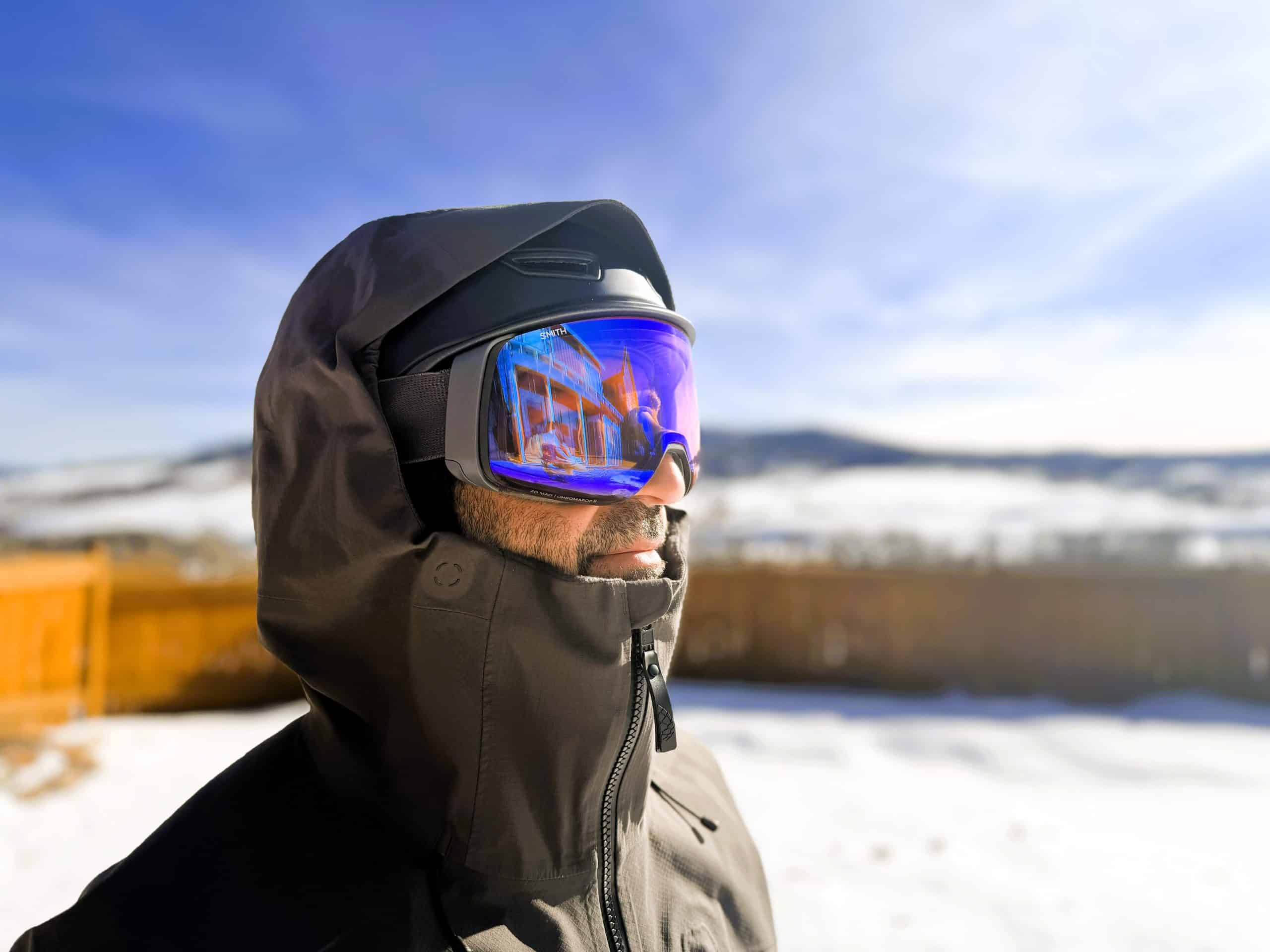
As expected for a freeride-focused jacket, the hood is large, structured, and fully helmet compatible. It has dual adjustment via two Cohaesive® cord locks at the collarbone and one behind your head, that work smoothly and keep everything looking clean. That said, there’s a lot of hood here. With my helmet on I still have a bunch of extra room in the hood. The adjustment points help, but I can't get a completely locked in fit. The other thing I notice is the bulk behind my head when I’m not wearing the hood. It is a combination of the thick fabric, large hood, and tall collar. It’s functional and protective, but it’s one of the few aspects of the jacket that I’m aware of while skiing.
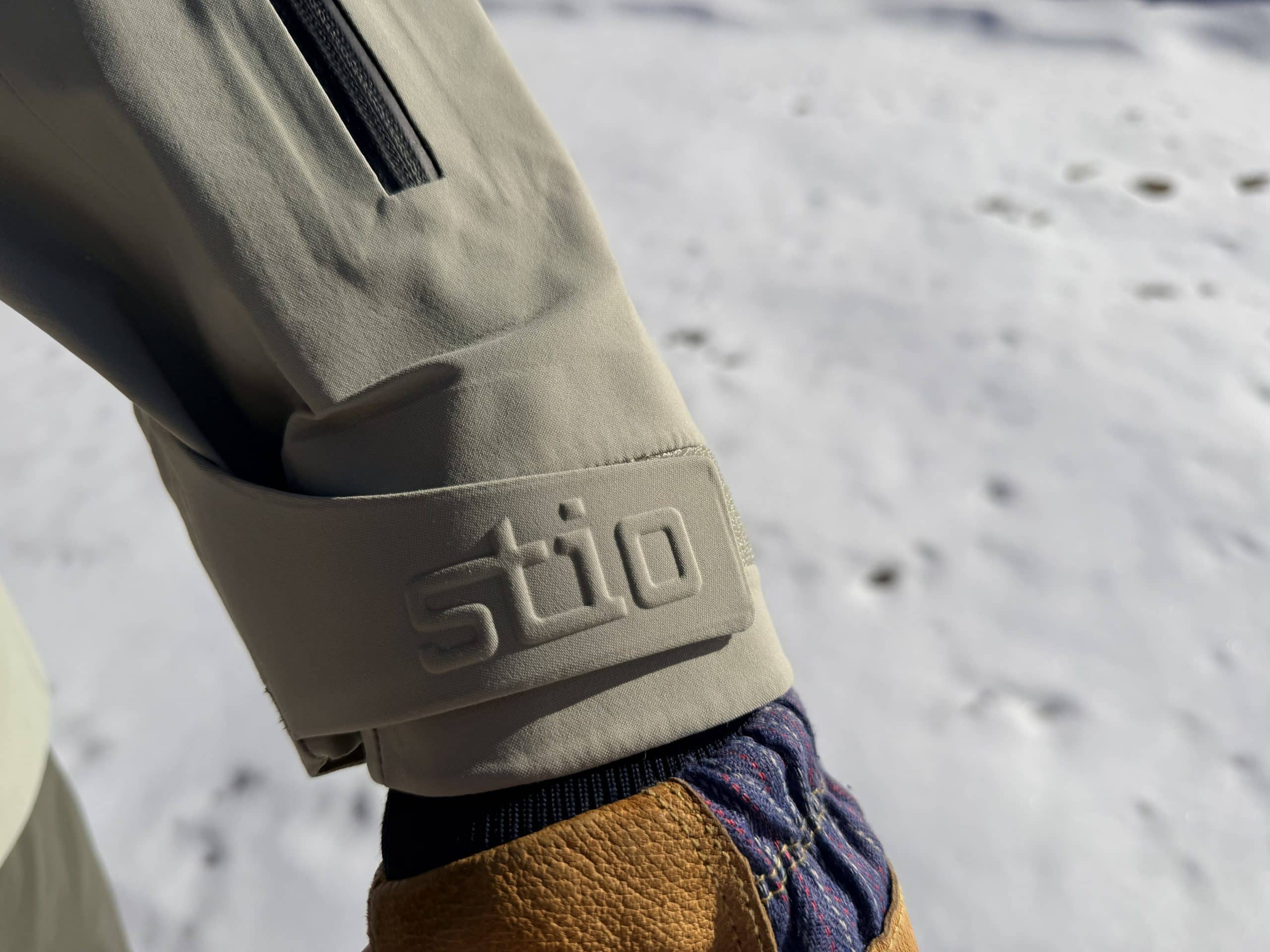
The cuffs fall into a similar category. The oversized Velcro tabs look great and are easy to operate with gloves on, but they make it harder to pull glove gauntlets over the sleeves compared to other jackets I use. It’s not a dealbreaker, but it’s a noticeable quirk. On the flip side they are great for my spring gloves (or work gloves) which I wear under the jacket sleeve. For nasty days on the hill though I use my full gauntlet Black Diamond Guide gloves and I find it takes some work to pull them over the Figment's cuffs.
Stio Figment Weather Protection and Breathability
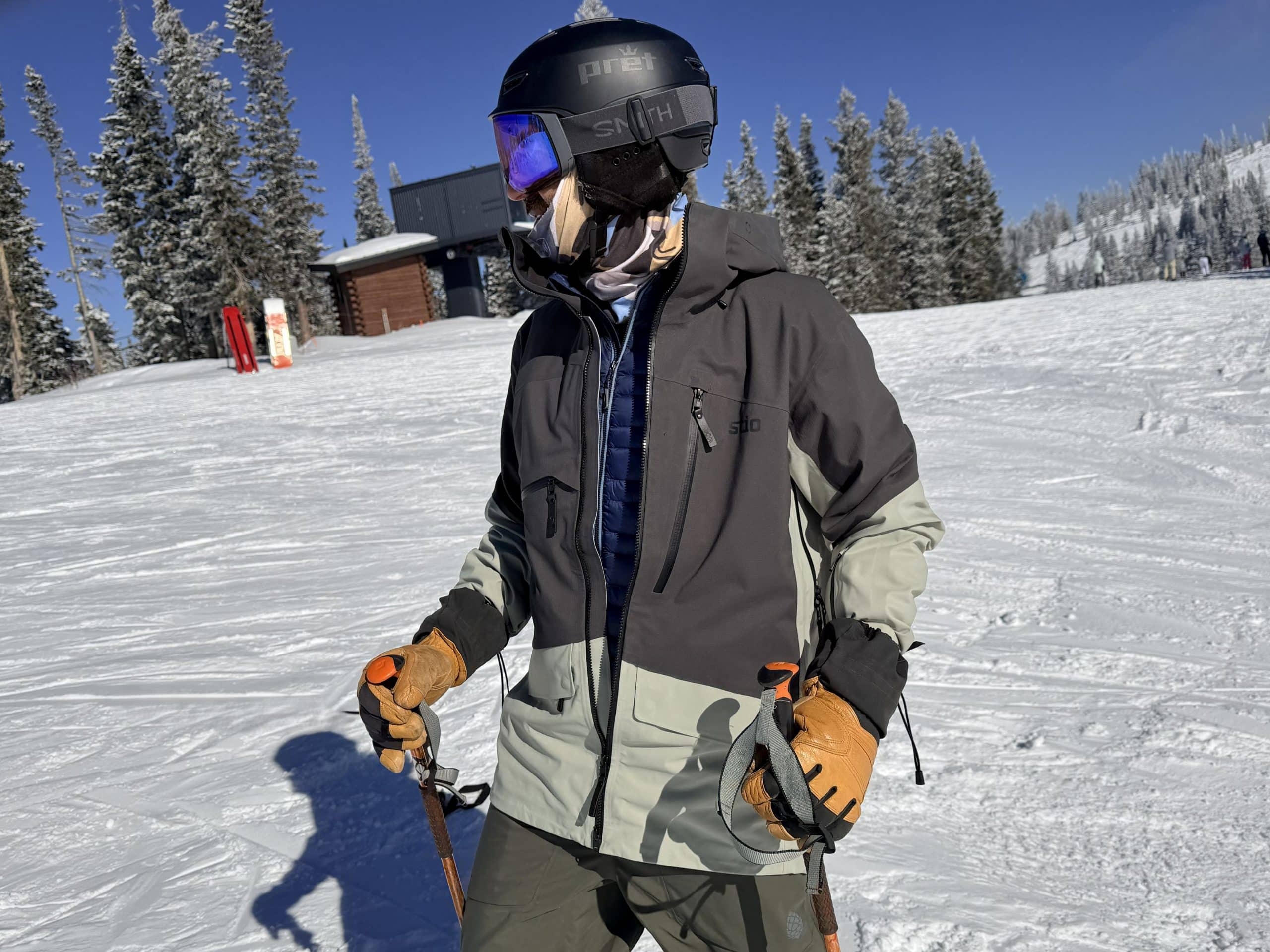
This day was clear and cold, with temps down to nearly 0°F / -18°C. My core stayed warm with the Pinion Down Sweater as a mid layer.
Weather protection is one of the Figment’s strongest attributes. The 150D 3-layer PeakProof fabric is extremely waterproof and completely windproof. In active snowfall, strong winds, and long days on the chairlift, the jacket consistently blocks the elements without flapping or crinkling. Stio has their own waterproof standard named PeakProof™, which they describe as Teton-tested. On paper the Figment has a waterproof rating of 20,000m, which is enough to protect you even in a heavy rain, though it isn't as high as many jackets using GORETEX-PRO with ratings as high as 28,000mm. My real world testing gives me confidence that this jacket is bomber enough for all conditions, except maybe all day super wet days when it is raining at the base area.
For a shell this robust, breathability is better than expected. The fabric manages moisture well on its own, and the underarm vents are a standout feature. The breathability rating of the fabric on the Figment is 10,000 g/m2/24hrs, which is suitable for moderate activity. When you are working harder, the pit zips are smooth and easy to operate—even with gloves on. I can actually open them while skiing, which isn’t always the case with heavier shells.
Although the Figment is uninsulated, the thicker fabric provides a bit of inherent warmth. My typical setup is a long-sleeve compression base layer paired with either a fleece or my Stio Pinion Down Sweater. With the down sweater, I stay comfortable down to 0°F / -18°C and slightly below.
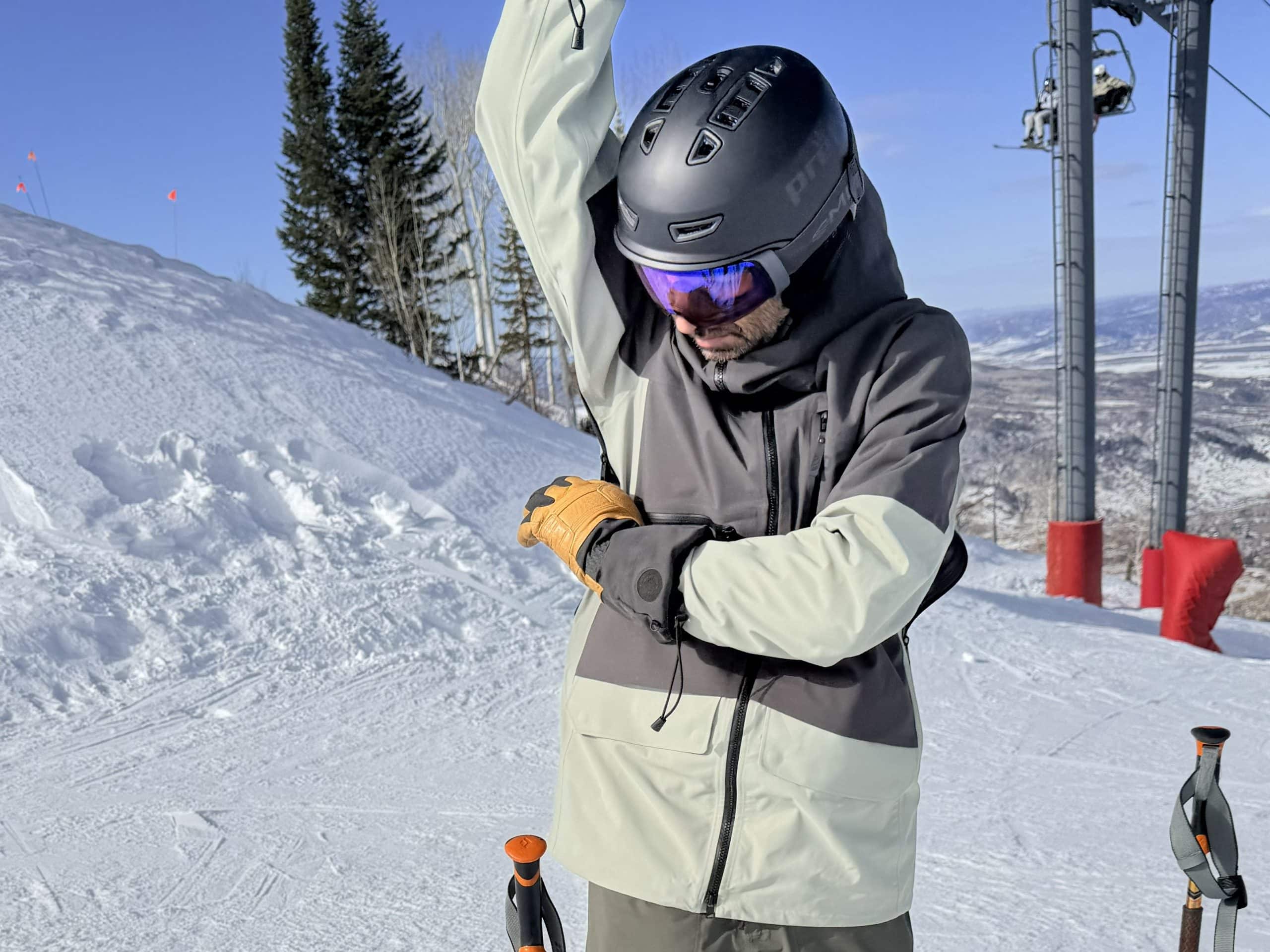
The zippers on the underarm vents are easy to use. I'm often frustrated with trying to open pit zips with gloves on, so high marks here for the Stio Figment.
Features and Practical Use
The Figment is extremely well thought out from a feature standpoint. Pocket layout is excellent, with four exterior pockets, a zippered internal chest pocket, and two large dump pockets. The exterior pockets not only work well on the hill but also reinforce the jacket’s freeride aesthetic.
Zippers across the board are smooth and confidence-inspiring. Even the two-way main zipper—something I usually find annoying—works well here and hasn’t caused frustration. Hem adjustment is simple and effective thanks to dual barrel adjusters, and all controls are easy to use with gloves.
Durability and Build Quality
Durability is where the Figment really separates itself. After months of regular use, including scraping through tight trees during a thin snow year, the jacket shows zero damage. The 150D fabric feels nearly impervious to abrasion, and overall construction quality is excellent. Everything about the jacket—from the fabric to the seams to the zippers—feels built for years of hard resort use.
Stio Figment Vs. Arc'teryx Sabre SV Vs. Mammut Haldigrat
Compared to the Arc’teryx Sabre SV, the Figment leans much harder into freeride styling and is 1.65 in / 4.2 cm longer than the Sabre SV. The Sabre SV uses 200D GORE-TEX PRO ePE which I think breathes slightly better. So all around the Sabre SV is the better choice for a mix of freeride and more high-output hiking/touring. Compared to the Mammut Haldigrat HS, it offers a noticeably burlier fabric with a more substantial feel. If you split time between touring and resort skiing, the Sabre SV still makes more sense. If you prefer a softer, more supple fabric, the Haldigrat is an excellent alternative. But for steep, deep resort days in any conditions, the Figment remains my top pick.
| Model | Our Review | Price | Fabric | Length (Size M) |
|---|---|---|---|---|
| Arc'teryx Sabre SV (men's) | Review | $900 | 200D GORE-TEX PRO ePE | 31.1 in / 79 cm |
| Mammut Haldigrat (men's / women's) | $625 | 40D DRY Expedition 3L | 32 in / 81.28 cm | |
| Stio Figment (men's / women's) | Review | $529 | 150D PeakProof® 3L | 32.75 in / 83 cm |
Final Take
The Stio Figment is designed for resort skiers, big-mountain riders, and freeriders who prioritize durability, protection, and style. I didn’t expect to like a freeride jacket this much, but it continues to impress every time I wear it. It looks great, performs exceptionally well in harsh conditions, and offers some of the best build quality available in this category.
The stiff hood and oversized cuffs are the only things keeping it from a perfect score, but they’re minor tradeoffs in an otherwise outstanding jacket. If you’re looking for a long-lasting, resort-focused freeride shell, the Stio Figment is one of the best options available right now.
Stio Figment FAQ
Is the Stio Figment jacket waterproof enough for storm skiing?
Yes. The Stio Figment uses a 3-layer PeakProof® fabric with a 20,000 mm waterproof rating and a PFAS-free DWR finish, which provides excellent protection in heavy snow, wind, and long storm days at the resort. In continued use during snowy and windy conditions, the fabric resists wetting out and blocks moisture effectively.
How does the Stio Figment fit compared to other ski jackets?
The Stio Figment has a relaxed, freeride-oriented fit that is longer and baggier than most touring or all-mountain shells. Many skiers, including myself, may want to size down compared to their usual jacket size due to the generous cut and long center-back length.
Is the Stio Figment good for backcountry or touring use?
The Figment can be used for backcountry, but it's not optimal for high-output touring. While it breathes well for a burly shell and includes pit zips, its heavier 150D fabric and relaxed fit make it better suited to resort days, sidecountry laps, and short hikes rather than long uphill tours.
How warm is the Stio Figment shell?
The Figment is an uninsulated shell, but its thicker 150D fabric provides more inherent warmth than lightweight touring shells. With a proper layering system—such as a base layer and insulated midlayer—it remains comfortable in temperatures down to around 0°F / -18°C and slightly below during resort skiing.
How durable is the Stio Figment freeride shell?
The Stio Figment is extremely durable. The 150D recycled polyester face fabric resists abrasion well, even when skiing through tight trees or variable terrain. After months of ongoing use, there are no signs of damage, making it a strong choice for skiers who prioritize long-term durability.
Check out our other content on jackets:
Guide: Insulated & Shell Jackets
Start here:


Also see: