


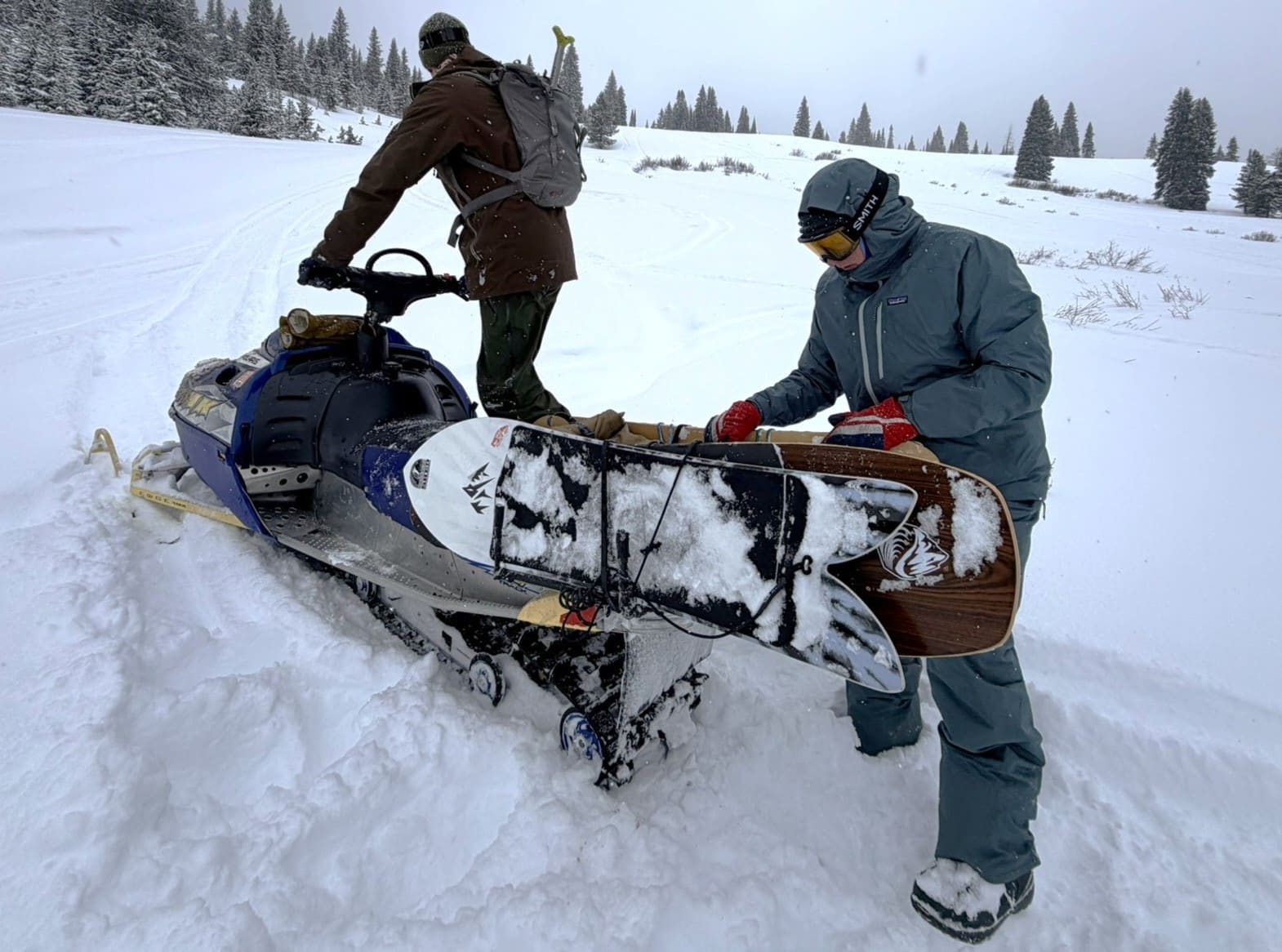
Todd wearing the Patagonia Powder Town Insulated jacket and pants for a full day on sleds in the backcountry.
The Patagonia Powder Town line is designed to be a durable, weather-protective ski system for resort riders and backcountry users who want dependable performance without stepping into ultra-technical, high-price shells. After a full season of testing the standard Powder Town Jacket and bibs as well as the Insulated Powder Town Jacket and Pants, it’s clear that Patagonia prioritized durability, comfort, and real-world ski features over minimal weight or sleek styling.
This review covers how the full Powder Town system performs on snow, how the standard and insulated jackets compare, and whether the pants or bibs are the better choice depending on how and where you ski.
Bottom Line: Patagonia Powder Town
The Patagonia Powder Town and Insulated Powder Town jackets offer excellent weather protection, durability, and ski-focused features. The fit isn't my favorite and there are lighter options available. Skiers and riders who want room to layer and gear that can take a beating will find this system extremely reliable.
Overall Rating:  4.2 / 5
Pros:
Cons:
Patagonia Powder Town Jacket Overview
Men's and Women's
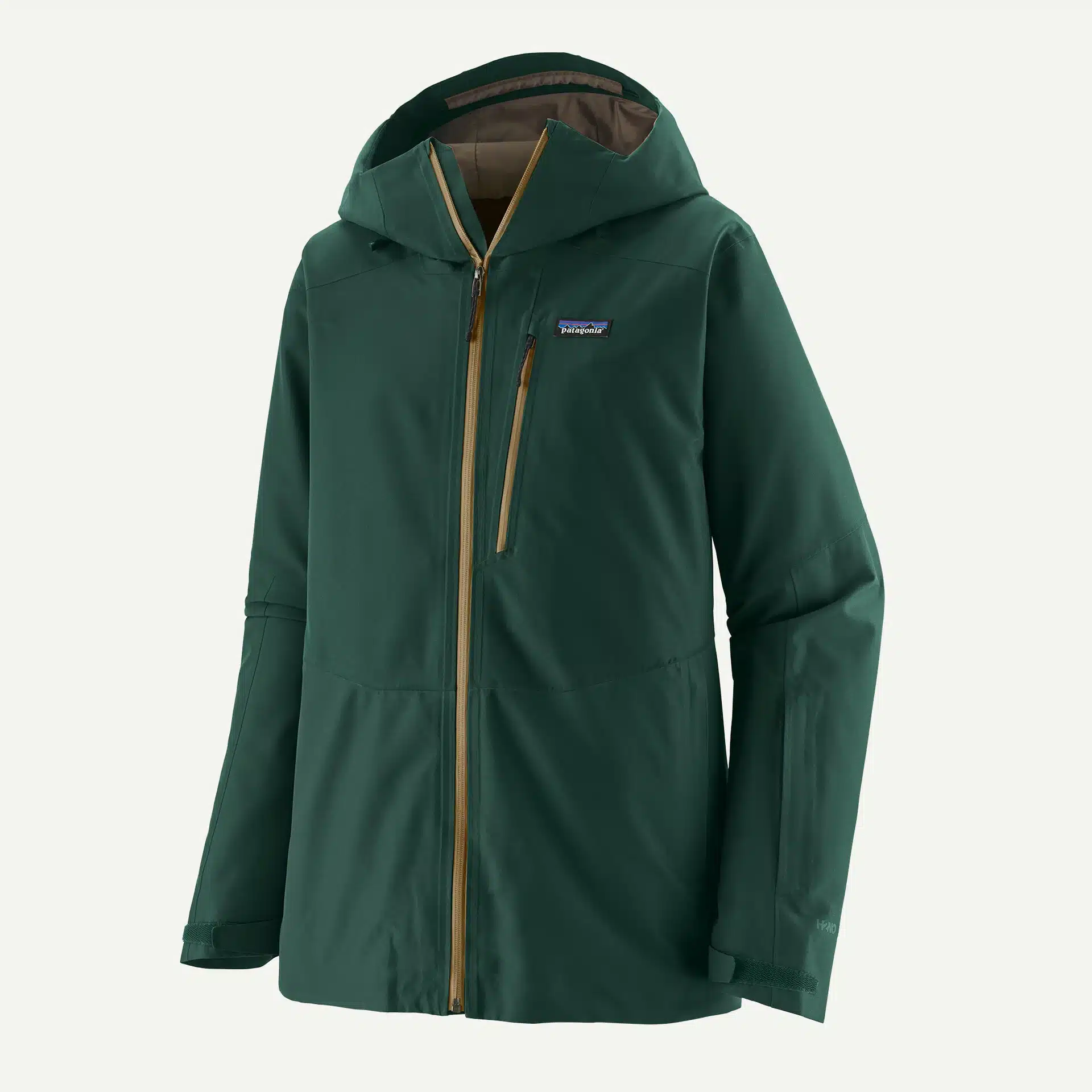
The Patagonia Powder Town men's jacket in Cascade Green.
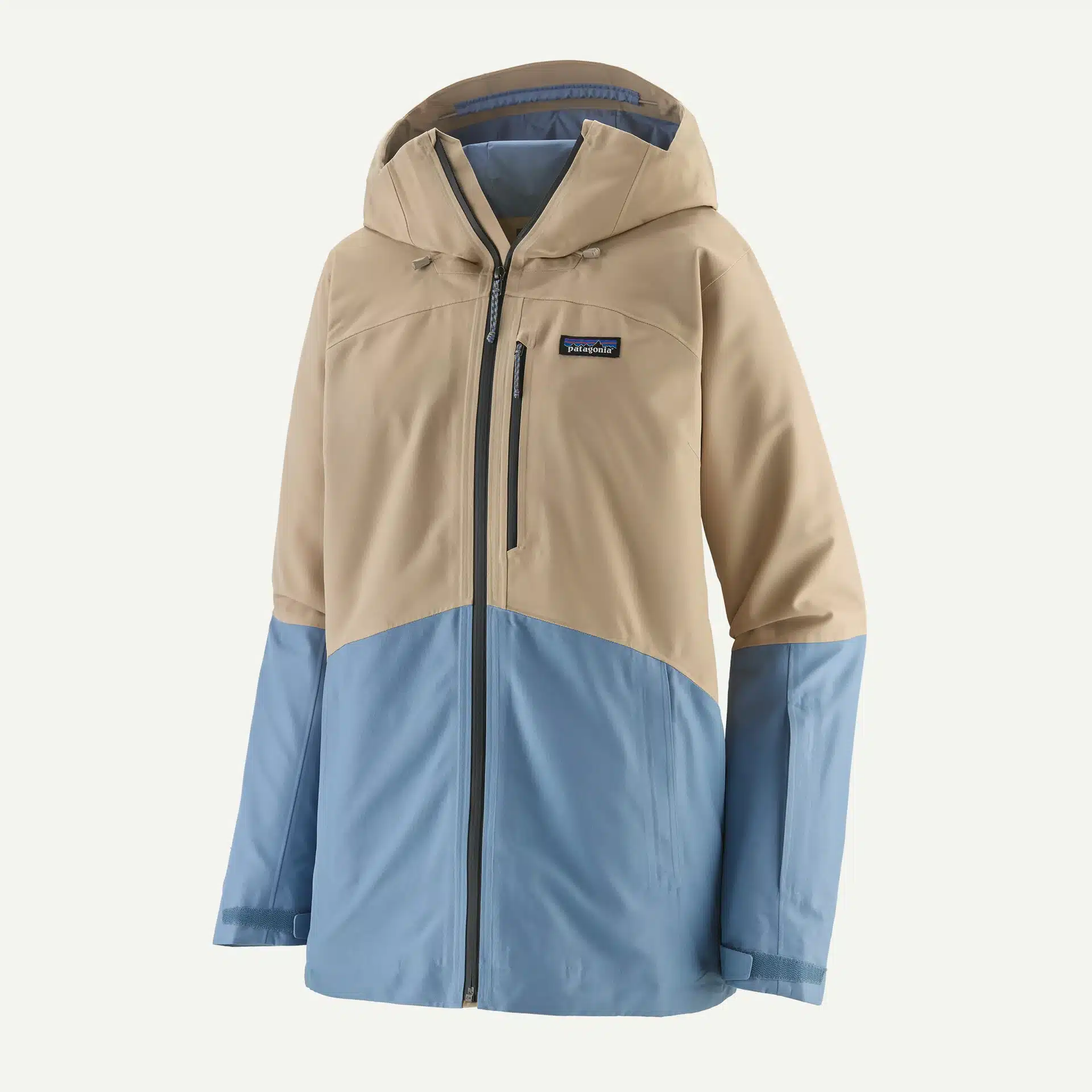
The Patagonia Powder Town women's jacket in Oar Tan.
Standard vs. Insulated Powder Town
Patagonia offers both the Powder Jacket and Powder pants in insulated and non-insulated versions. Let's quickly compare them.
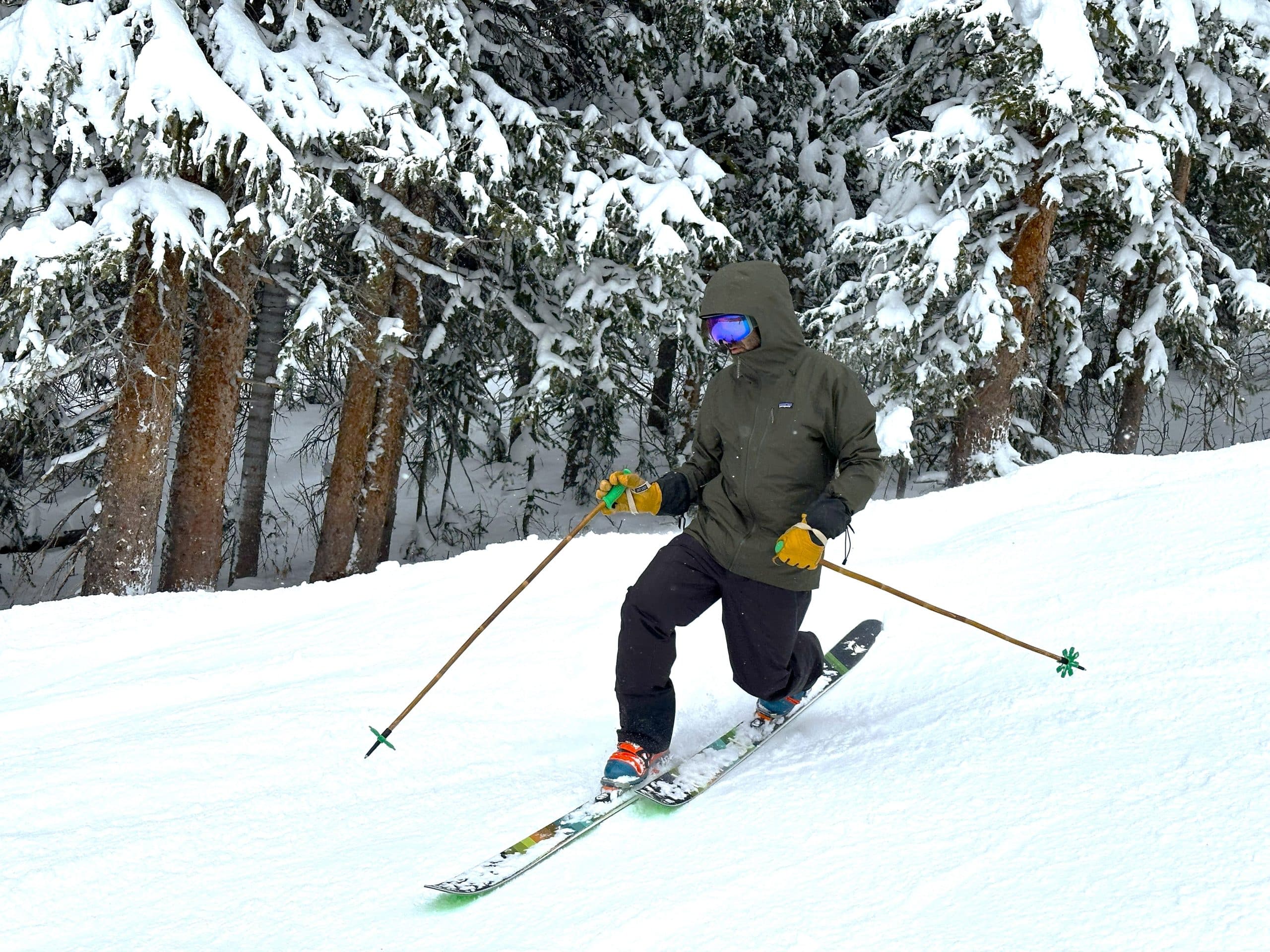
I've done a lot of resort skiing and backcountry laps in my (non-insulated) Powder Town jacket and bibs.
Powder Town Jacket vs Insulated Powder Town Jacket
All Powder Town jackets use the same 2-layer, 5.5-oz 150-denier polyester shell and will offer the same waterproof protection. The insulated versions have 80-g (body) and 40-g (sleeves) Thermogreen® synthetic insulation. Thermogreen® is Patagonia's proprietary 100% recycled polyester insulation. The other noticable difference is that the taffeta liner on the insulated has a more typical feel compared to the grid on the non-insulated version. In our use we don't think one is more comfortable than the other. Both versions of the Powder Town jacket have the same pockets, zippers, and hood.
Powder Town Pants and Bibs vs Insulated Powder Town Pants
| Product | Price (USD) | Weight (men's / women's) | Pockets |
|---|---|---|---|
| Powder Town Pants (men's / women's) | $249 | 720 g / 660 g | two handwarmer, one thigh |
| Insulated Powder Town Pants (men's / women's) | $269 | 702 g / 680 g | two handwarmer |
| Powder Town Bibs (men's / women's) | $299 | 820 g / 780 g | two handwarmer, chest |
Besides the insulation, there is a difference in the pocket configurations between the various Powder Town pants and bibs. This comparison from Patagonia is super helpful to see the differences between models.
The standard (non-insulated) Powder Town is offered in both a pant and a bib, while the insulated Powder Town is only offered in a pant. Being that I always prefer bibs, I rock the non-insulated version, while Todd (seen in the photos of this article) has the full insulated setup and therefore the pants. The insulated Powder Town pants use 60-g Thermogreen® 100% recycled polyester insulation.
Insulated pants do a slightly better job of keeping really cold air out, compared to non-insulated with a baselayer. I notice this the most sitting on a cold chairlift on a breezy day. If you're mostly resort riding and encounter a lot of frigid days, then the insulated version is a great choice. Just be prepared to have vents wide open for spring skiing.
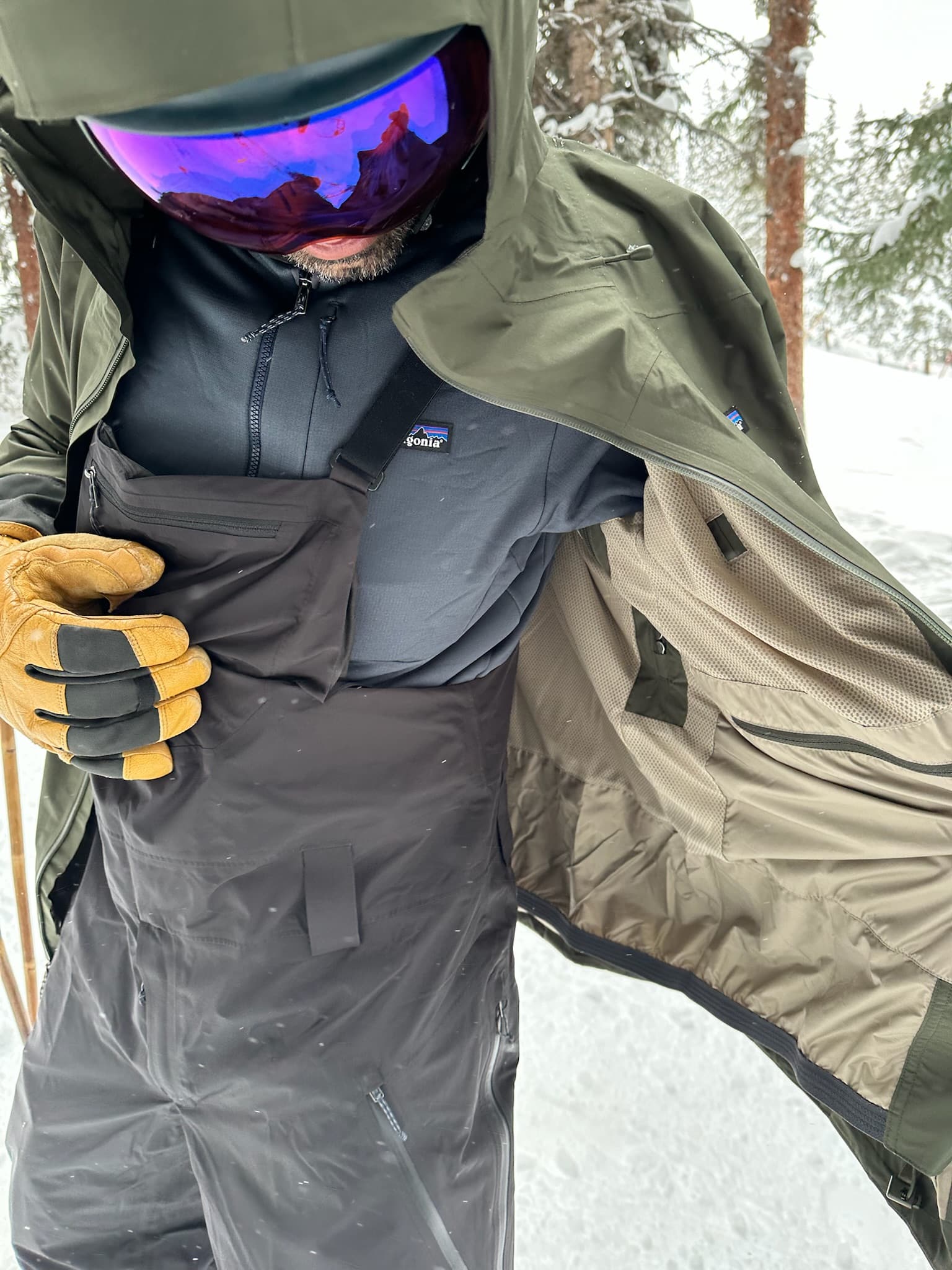
I almost always prefer bibs. My standard midlayer with the Powder Town is the Patagonia R1 Thermal fleece. In this photo you can see the zippered internal pocket and the pass-through port for a headphone wire of the jacket.
Waterproofing
Read about Patagonia's H2NO waterproof performance standard here.
Patagonia’s H2No Performance Standard continues to impress me in real-world use. They don't publish waterproof ratings, but general knowledge is that H2NO fabrics are generally in the 20,000 - 24,000mm range. I've spent a lot of time in wet weather in H2NO gear and the protection is excellent. Water beads easily and the face fabric rarely takes on water (i.e. "wets out"). The Powder Town has proven the same. I rate all versions of the powder town high when it comes to waterproof performance.
For another H2NO shell from Patagonia, check out my review of the Torrentshell 3L rain jacket.
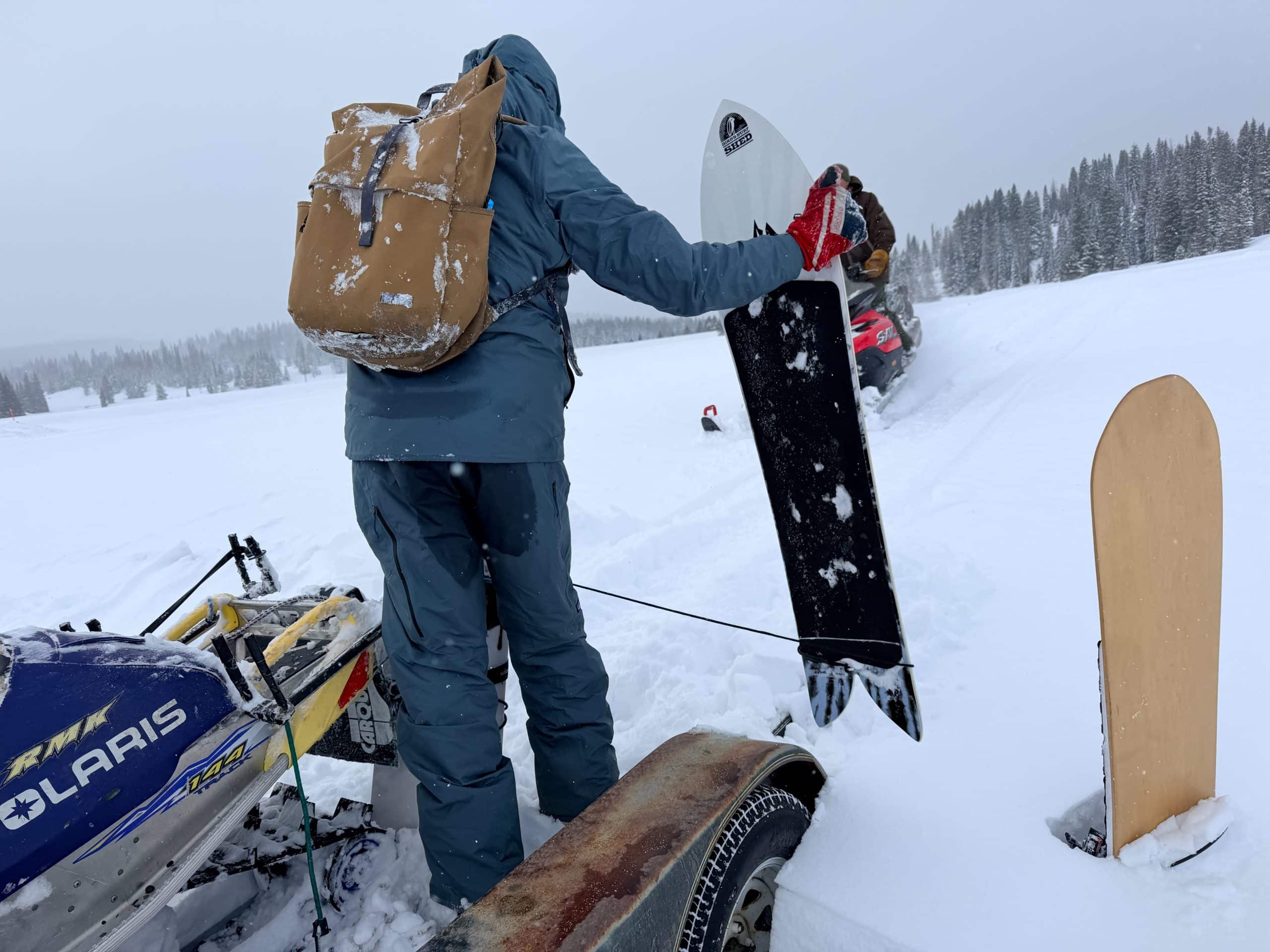
It took a full day of riding a wet snowmobile to wet out seat of the Patagonia Insulated Powder Town pants. They remained waterproof; no water made it through to base layers.
Wind Resistance
The jacket, pants, and bibs all block wind effectively. While the relaxed fit allows for some flapping in high winds, the soft fabric stays quiet and never feels distracting.
Breathability
This is not a high-output touring shell, but breathability is solid for its intended use. Large pit zips provide excellent heat dumping, and the 2-layer H2No fabric manages moisture well during hard resort skiing, boot-packing, and snowmobile-assisted laps. For true uphill touring, a lighter shell would be more appropriate, but within its design intent, the Powder Town performs well. If you are looking for a touring kit, check out our full review of the Patagonia Stormstride.
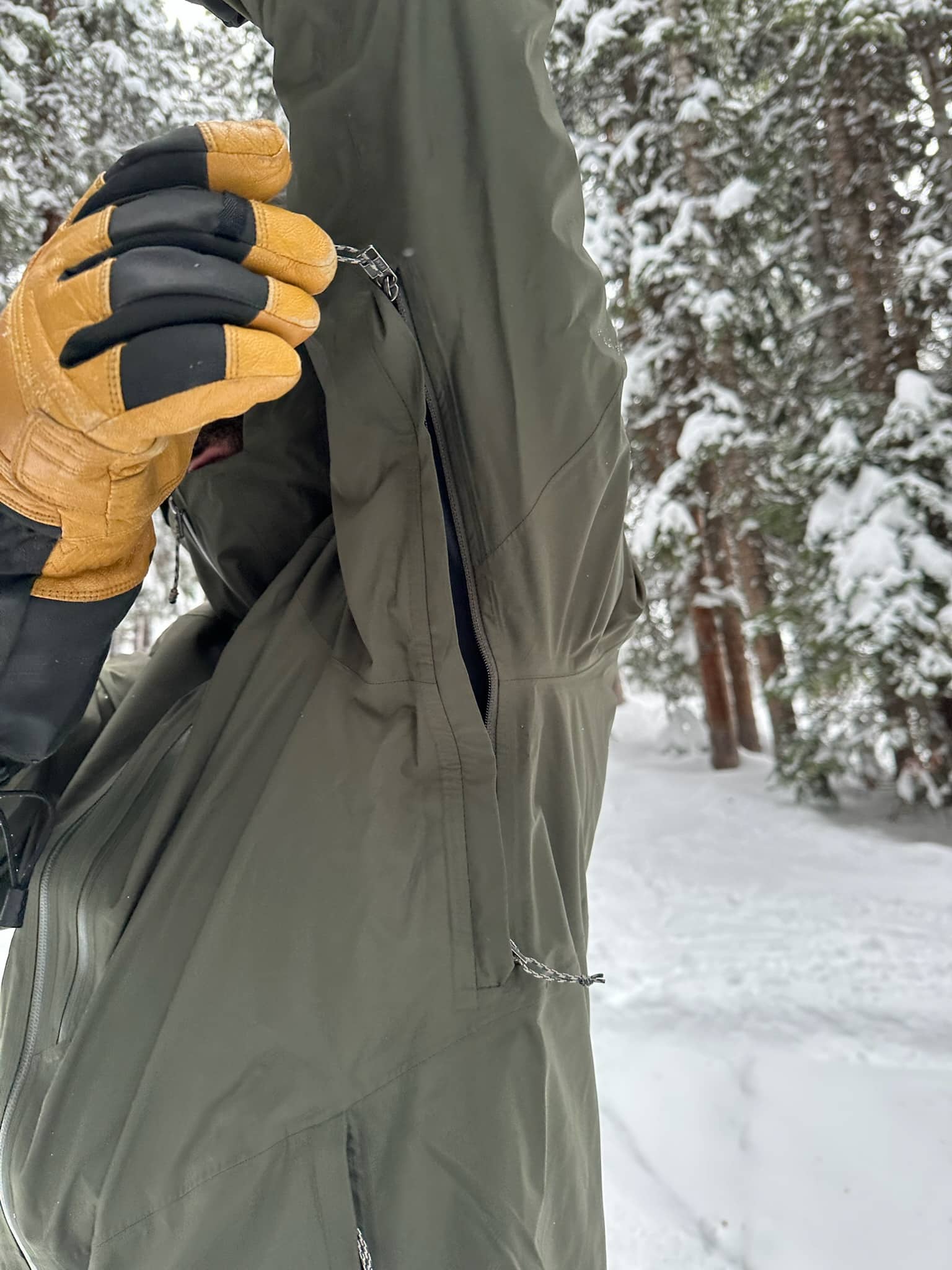
Patagonia gets high marks for having easy to grab zippers on the underarm vents.
Warmth & Insulation Performance
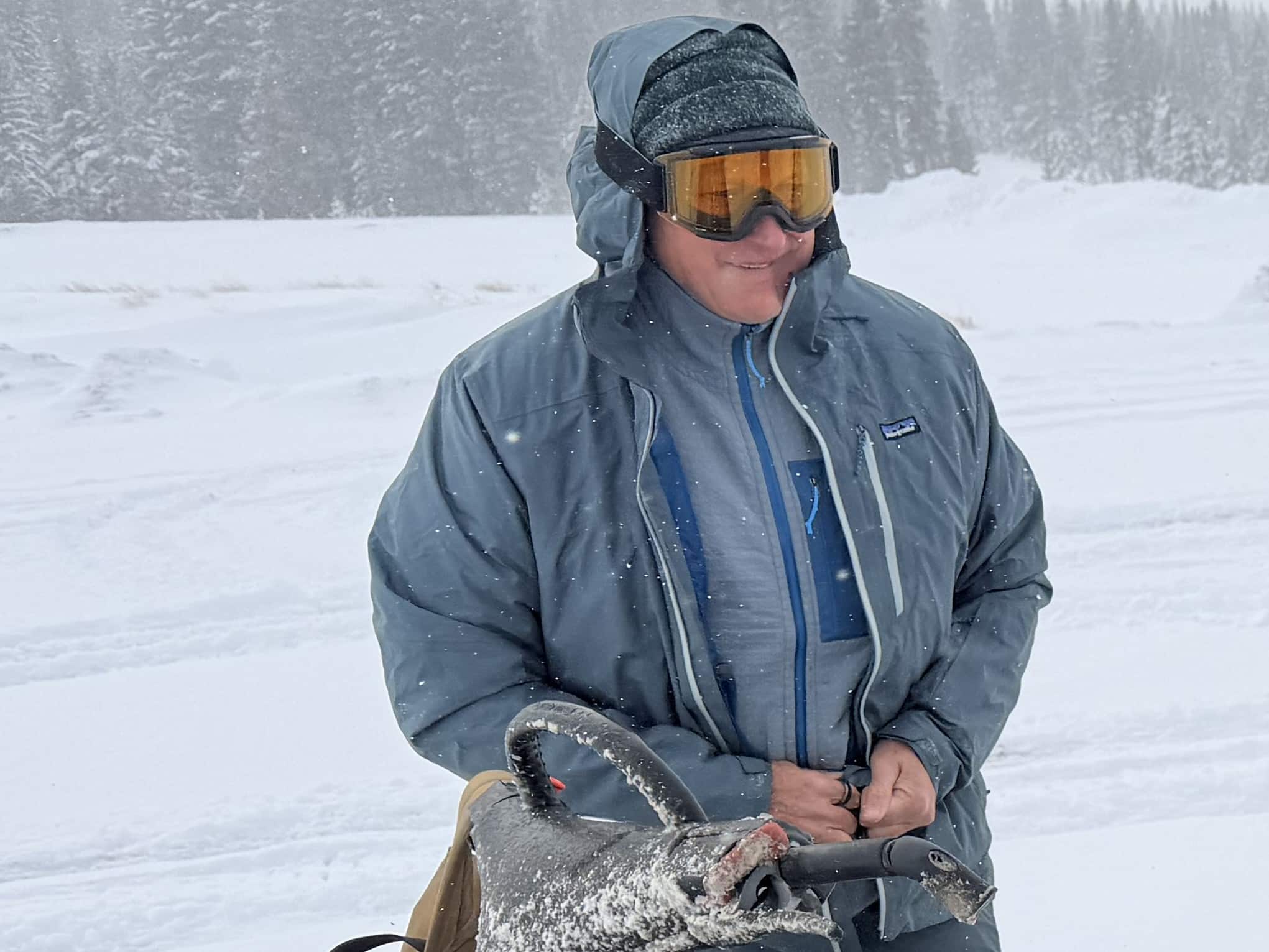
The R2 TechFace jacket is a good midlayer under the Insulated Powder Town for really cold temps.
The Insulated Powder Town Jacket proved warm enough for full days in temperatures as low as 9° F / -13° C when paired with a midlayer like the Patagonia R2 TechFace. Wind chill never became an issue, even during long snowmobile sessions.
With the standard shell, layering becomes key. An R1 Thermal works well down to around 20°F, while a Nano Puff or thicker base layer extends comfort into colder conditions. This flexibility is one of the main advantages of the non-insulated version.
If you aren't familiar with the R1 and R2 fleeces- the R2 is warmer, while the R1 breathes better. See our comparison of the Patagonia R1 vs. R2 here.
Features & Usability
The Powder Town jacket is loaded with ski-specific features.
Pockets
On the outside there are two handwarmer pocket, an exterior chest pocket, and a pass pocket on the left forearm. On the inside is one dump pocket on the right side and a zippered pocket on the left, opposite the dump pocket. The exterior chest pocket has a pass-through for a headphone wire. The handwarmer pockets are lined with fleece. I always praise down and insulated jackets with fleece linings. It works in this shell, but I feel like they add to the jacket feeling bulky. I don’t find I need lined pockets as much on a ski shell since I almost always have gloves or mitts on, but they’re certainly nice to shove cold hands into. If you use this jacket around town you’ll appreciate them more.
Hood
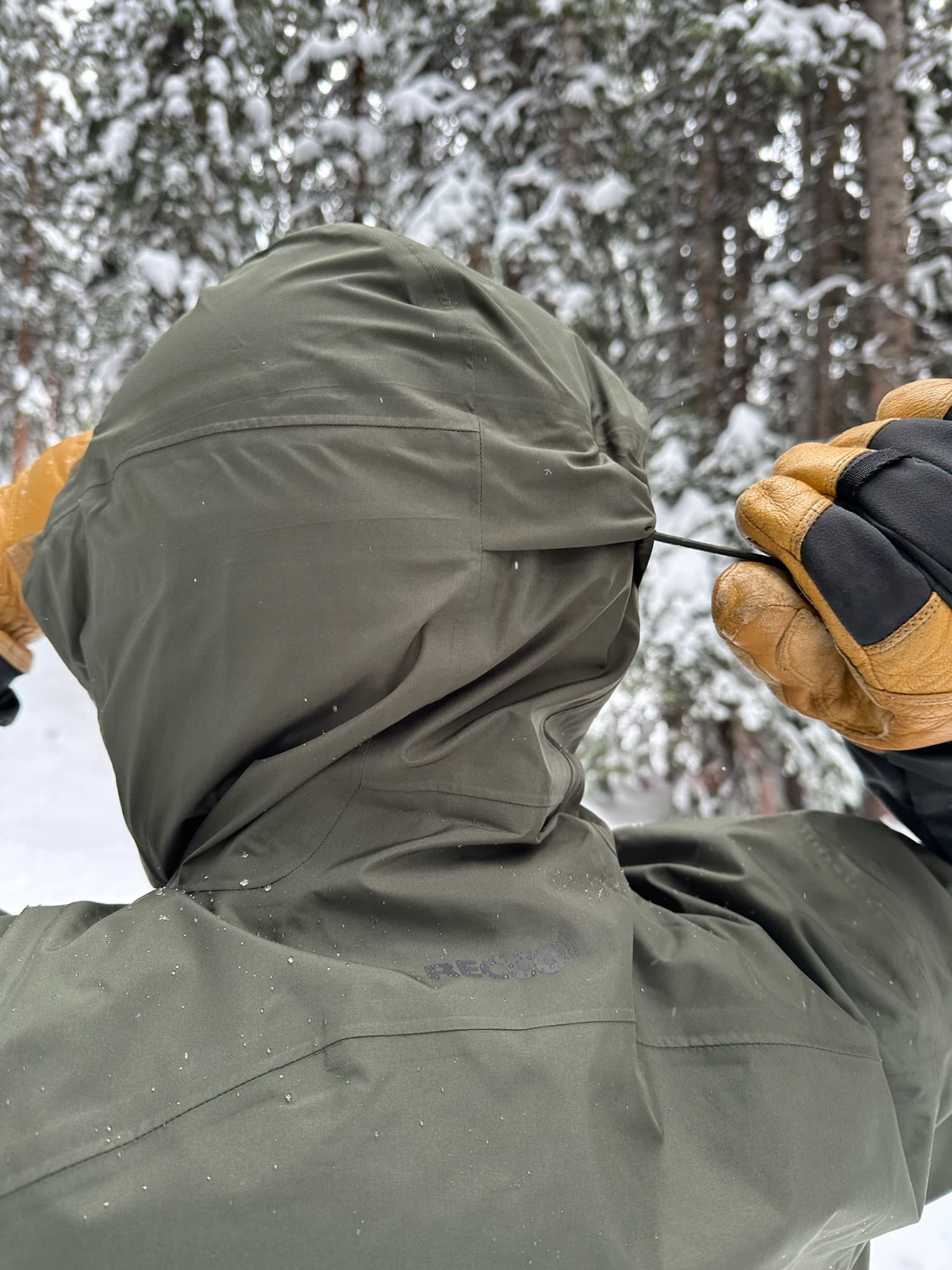
The hood is helmet compatible. It has two points of adjustability (cinching at the collar for tightening vertically and a rear adjustment for pulling back out of your eyes). I appreciate the two points of adjustability because oftentimes a single point of adjustment on a helmet compatible hood doesn’t get the fit I want.
Zippers
The YKK zippers are smooth throughout. The main zipper and exterior chest pocket have coated waterproof zips to lock out rain and snow. I really like the large squared-off zipper pulls, which are the same as on my Patagonia Stormstride and they’re some of the smoothest of any of my ski shells.
Vents
There are pit zips under each arm. Notably, the large metal zipper pulls are easy to grab and operate with the jacket on. This is a huge win compared to shells with tiny zippers which I can never operate when I need to most.
Hem
Interestingly, the hem adjustment on the Powder Town jacket is accessed from inside the handwarmer pockets for tightening, with barrel adjusters under the hem in the more typical place for loosening. This configuration works well for being able to easily tighten the waist of the jacket in a storm, without having to flip the waist when it is really blowing.
Powder Skirt
All Powder Town jackets have a powder skirt. A unique feature is the snap-loop at the middle back, which can be connected to any powder town pants or bibs. Powder skirts aren't a big priority for me, especially because I prefer bibs to pants, but they're great on deep days (if if you find yourself on the ground a lot...) For more on powder skirts, see our separate article.
Durability & Construction
Durability is one of the Powder Town line’s biggest strengths. The 150-denier fabric feels bomber, resists abrasion, and inspires confidence when skiing trees, riding lifts, or spending time on snowmobiles. Stitching, seam construction, and zipper quality all meet Patagonia’s high standards, and after two seasons of hard use, the gear has required no DWR reapplication and shows minimal wear. While I may complain about the weight of the Powder Town, it makes up for it in durability.
Powder Town Pants & Bibs Review
The Powder Town Pants and Bibs share the same 150-denier H2No fabric, giving them a similarly soft feel and high durability. Like the jacket, they are heavier than some alternatives, but that weight translates directly into abrasion resistance and longevity.
The insulated pants block wind slightly better than the bibs, but waterproof performance and durability are the same. The only issue we've had in our testing of the different Powder Town products is a zipper on my bibs that opened up behind the zipper pull on a hip vent. I completely unzipped and re-zipped it and haven't had the issue repeat.
Who Should Buy the Patagonia Powder Town System?
The Powder Town system is best suited for:
- Resort skiers and snowboarders
- Riders who value durability over ultralight weight
- Anyone who wants a dependable, no-nonsense ski kit with Patagonia’s sustainability ethos
FAQ - Patagonia Powder Town
What is the difference between the Powder Town and Insulated Powder Town Jacket?
Besides the obvious difference in insulation, the jackets have the same features. They share the same 150d 2-layer waterproof shell fabric, hood design, pockets, and underarm vents. The insulated version uses Patagonia's Thermogreen® synthetic insulation for added warmth.
Is the Patagonia Powder Town Jacket warm enough for winter skiing?
The insulated Powder Town is great for cold days on the mountain with a light fleece baselayer. The non-insulated Powder Town is versatile and has room for plenty of layers. I use the non-insulated version of the Powder Town with a long sleeve compression base layer and either my R1 thermal fleece or my Nano Puff jacket.
Is the Patagonia Powder Town Jacket waterproof?
The Powder Town series offer serious protection against wet weather. The 150d 2-layer face fabric meets Patagonia's H2NO standard for waterproof performance. In our testing water continues to bead on the jackets even in sustained wet snow. Read about Patagonia's H2NO waterproof performance standard here.
How does the Patagonia Powder Town Jacket fit?
The Powder Town jacket has Patagonia's regular fit, thought I would say it runs on the large side. I find the non-insulated version on the Powder Town jacket is a little baggy as my around town jacket, but fine once I am in my ski gear. It certainly allows plenty of room for layers.
Should I choose Powder Town pants or Powder Town bibs?
Normally I recommend bibs without much discussion. With the Powder Town it is important to remember that the pants only come in an insulated version, while the bibs do not offer insulation. This is the primary decision. Personally, I still opt for the bibs and rely on base layers for my insulation. I prefer the coverage of bibs and the versatility of layering my insulation.
Check out our other content on jackets:
Guide: Insulated & Shell Jackets
Start here:


Also see: