

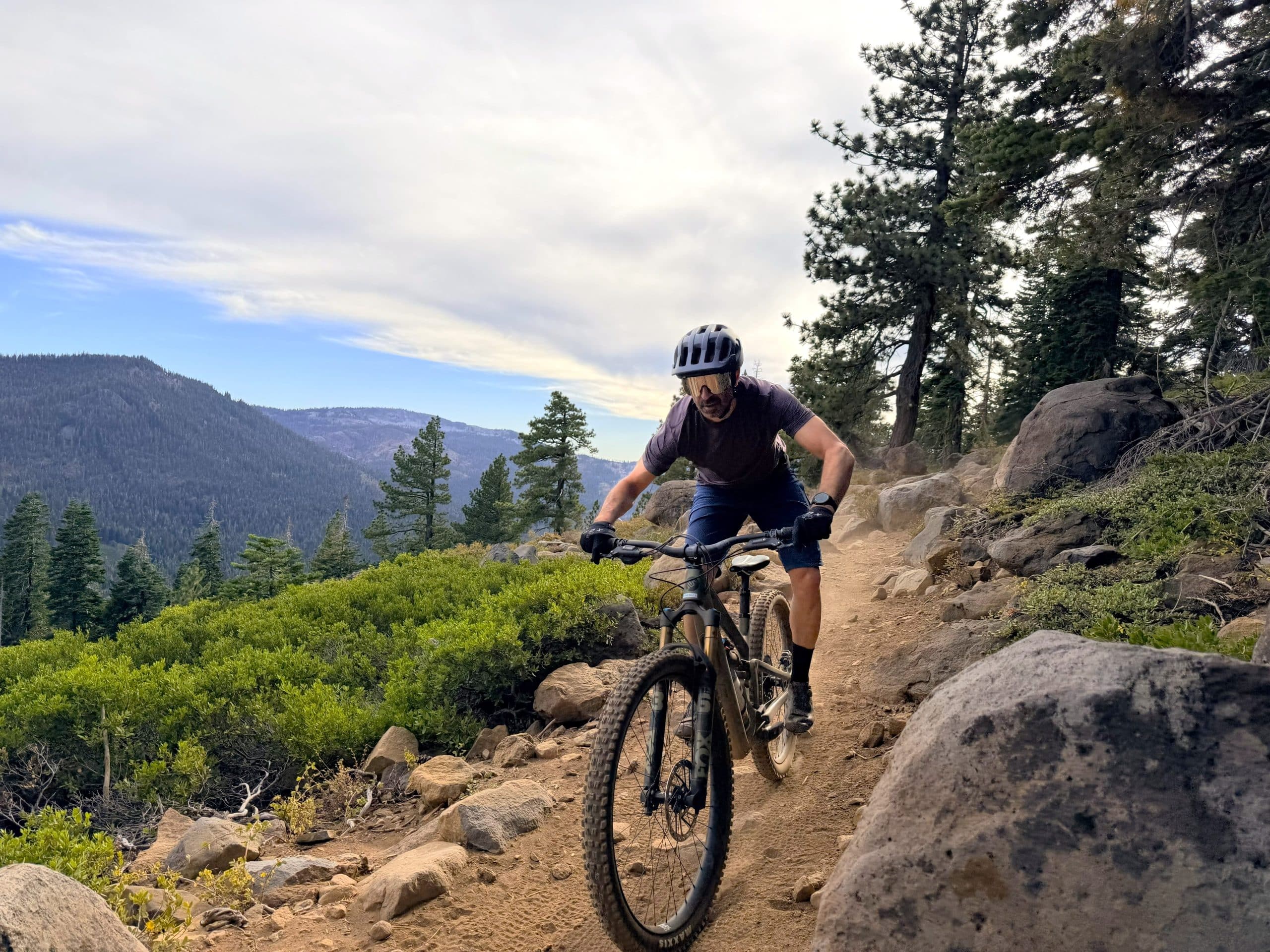
For years, I've used my road helmet for all of my riding (gravel, mtb, etc...). For a long stretch that was a Specialized S-Works lid, and more recently the POC Cytal. Mountain bike helmets felt too bulky. The POC Cularis has changed that. It arrived just in time for a five-day trip to Lake Tahoe, where we rode every day, progressively beating ourselves down. At 350 grams in a Medium, it's the lightest MTB helmet POC has ever built, and it carries a Virginia Tech safety rank most helmets never get near. I wore it every day of the trip, for both hot days with big climbs as well as chilly morning shuttle missions. I'm surprised at how much I like the POC Cularis; read on for details on the fit and features.
At a glance
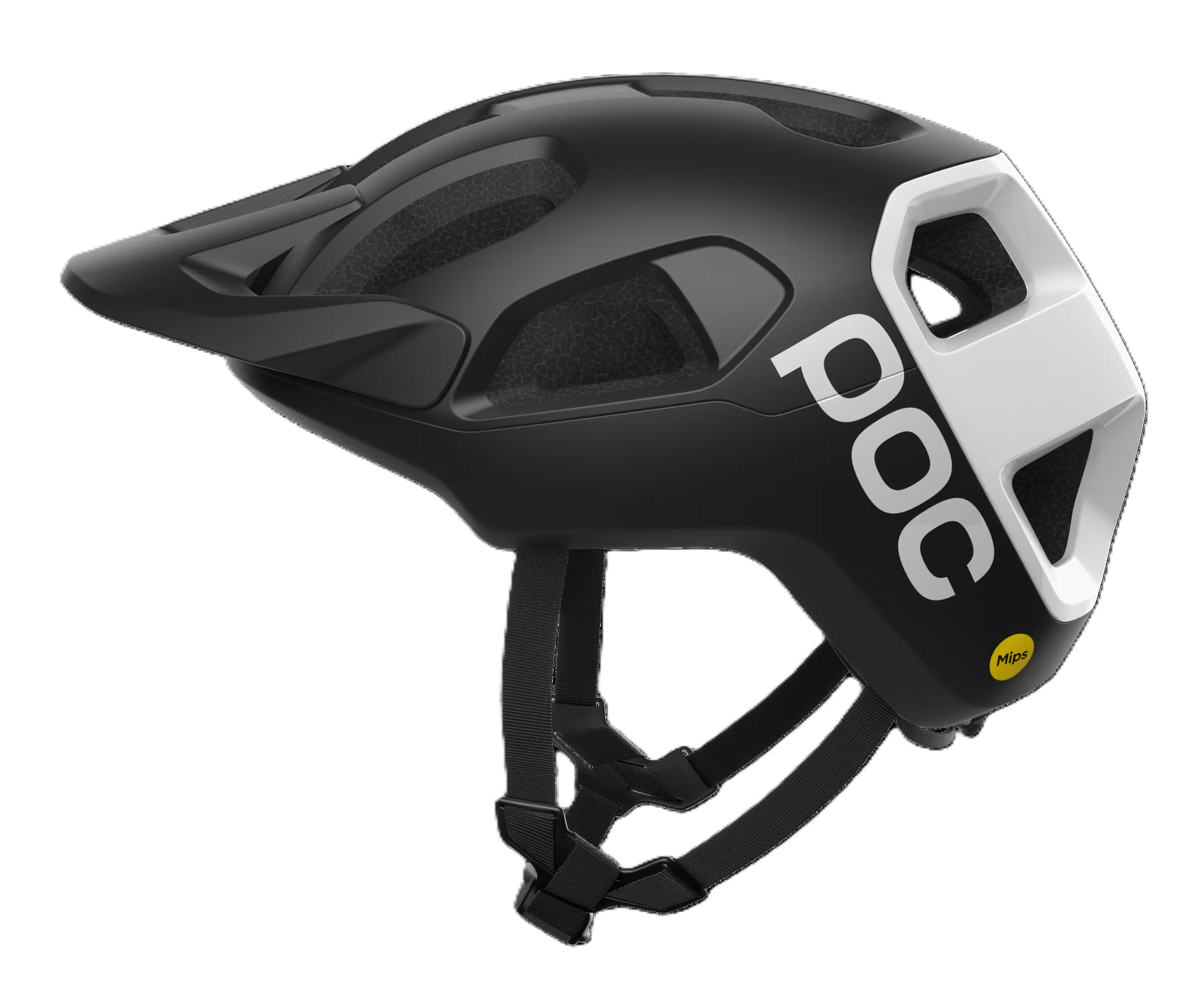
POC Cularis helmet in Uranium Black / Hydrogen White.
POC Cularis
Fit and Comfort
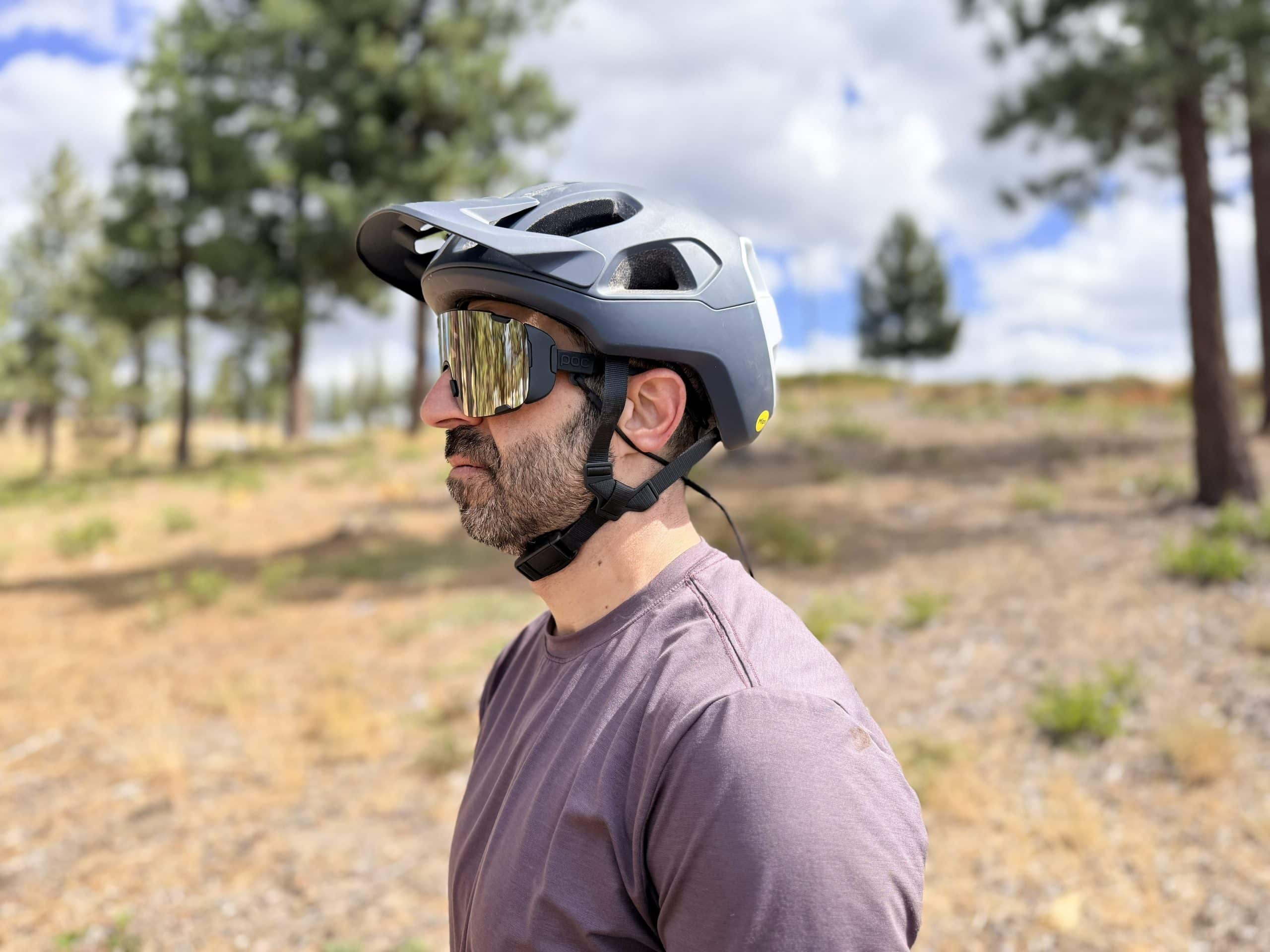
The Cularis feels light the moment you pick it up, and that impression holds once it's on. I'm a medium in nearly every helmet brand, and the Cularis medium fit without the pressure points I've felt at the top of my head in other helmets — POC's shape works for my head, full stop. The 360° dial in back gets me a snug fit in a couple of turns, the chin strap adjusts easily, and the Fidlock magnetic buckle clicks shut one-handed, no fumbling to line up a plastic clasp while I'm still rolling. Compared to the enduro-style helmets with full visors I'd avoided for years, I forget this one is on my head instead of noticing it. Even after four-hours of riding the Tahoe Rim Trail and Marlett Flume IMBA epic, I was still perfectly comfortable with this helmet on and I didn't have to readjust it once.
Ventilation
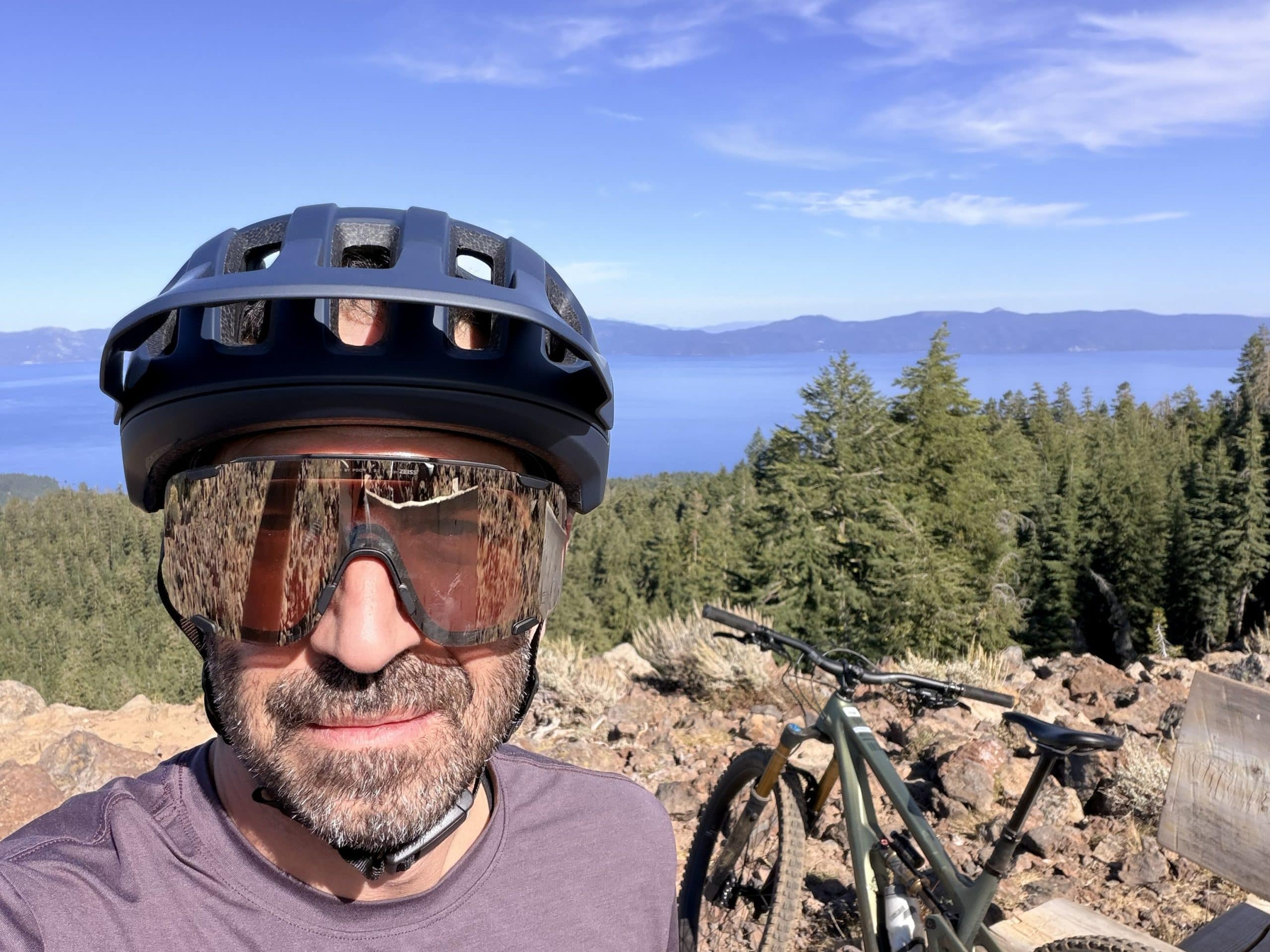
Fifteen vents and POC's CFD-tuned airflow add up to a helmet that breathes. I noticed the difference climbing out of the parking lot on a grind up to the summit of Stanford Rock — this isn't a hunker like the heavier enduro lids, and the airflow stayed noticeable even grinding up switchbacks in full sun.
I tracked all five days on a Garmin Edge, and the helmet itself never showed up in how any of those rides felt — the mark of a helmet doing its job. Here is my route to Stanford Rock; feel free to export the GPX file.
Visor and Trail Conditions
The three-position visor adjusts on the fly, which mattered more than I expected. I pulled it low through tight singletrack under low sun and pine cover — similar terrain to what we found hut-hopping the Aquarius Trail system — then flipped it up out of the way once the trail opened up and the light changed. It's a feature I wasn't expecting to actually care about, but I found it useful on long rides like the IMBA Epic tagged Tahoe Rim to Flume Trail.
Rotational Impact Protection
The Cularis uses MIPS Air Node, a low-friction layer built into the comfort padding that lets the helmet shift slightly on impact instead of transferring that rotational force straight to your head. I'll say the honest thing here: plenty of helmets wear a MIPS badge and still score poorly on independent safety tests. Virginia Tech runs the most comprehensive bicycle helmet testing program in the country, and their bar for a recommended helmet is four stars. I checked their 2026 ratings and the Cularis sits at #4 out of all 308 bicycle helmets they've tested — mountain, road, urban, and everything between — with a STAR score of 7.10 and a full 5-star rating. Filter that list down to mountain-specific helmets and it's the highest-ranked dedicated trail lid on the board. That's an unusual pairing — this is one of the lightest helmets in its class and one of the safest tested anywhere, not a trade-off between the two. You can find the Virginia Tech helmet testing site here.
Durability & Build Quality
Underneath the vents, POC bridges the shell and the EPS liner with aramid — the same fiber used in body armor — for structural stability and puncture resistance. POC also designs the visor to break away under impact instead of transferring force to your neck, a deliberate trade-off: it's a wear part by design, not a flaw. Five days of Tahoe singletrack, plenty of low branches, and one unplanned dismount into a manzanita bush, and the helmet came home with zero cracks, loose vents, or buckle issues.
Value
At $260, the Cularis sits at the top of the trail helmet market, and it doesn't hide that. It undercuts the Smith Forefront 3 ($300) by $40 while weighing 60 grams less, and it's only 10 grams heavier than the Giro Manifest Spherical ($280) for $20 less. If $260 is more than you want to spend, POC also sells the Cularis Pure at $210 — 30 grams heavier, same Air Node MIPS, one step down in shell material. Weighed against what a hospital visit costs, paying a premium for the best-tested helmet in this category is the easiest gear math I've done all year.
How It Compares
| Spec | POC Cularis | Smith Forefront 3 | Giro Manifest Spherical |
|---|---|---|---|
| Price | $260 | $300 | $280 |
| Weight (size M) | 350g | 410g | 340g |
| MIPS Type | Air Node | Air Node + Koroyd | Spherical Technology |
| Virginia Tech Rating | 5 stars (top-5 ranked) | 5 stars | 5 stars |
| Buckle | Fidlock magnetic | Standard clasp | Standard clasp |
The Smith Forefront 3 covers more of your head and adds Koroyd to its MIPS Air Node layer, but that extra coverage costs 60 grams and $40 over the Cularis — noticeable on a five-hour ride. The Giro Manifest Spherical is the featherweight of the three at 340 grams and uses Giro's Spherical MIPS instead of Air Node, but it costs $20 more than the Cularis and skips the Fidlock buckle for a standard clasp. Weight, price, and Virginia Tech data all favor the Cularis; the Forefront 3 wins on coverage if you ride rougher terrain.
Who Should Buy It
Buy the Cularis if you do long trail and XC days where every gram and every vent matters, or if a helmet's independent safety data actually factors into your purchase — the Virginia Tech ranking here isn't marketing copy, it's tested.
Who Should Skip It
Skip it if you're riding bike parks or DH where rear-head and temple coverage matter more than weight. And if $260 is a stretch, the category has solid $100–150 options; the Cularis is priced for riders who've already decided lightweight and top-tier safety data are worth paying for.

Check out more bike coverage
POC Cularis MTB Helmet Review: Why I Retired My All-Road Lid After One Trip to Tahoe

For years, I've used my road helmet for all of my riding (gravel, mtb, etc...). For a long stretch that was a Specialized S-Works lid, and more recently the POC Cytal. Mountain bike helmets felt too ...
Evoc Bike Travel Bag Pro Review

The Evoc Travel Bag Pro is a road, gravel, and MTB travel case with solid protection and straightforward packing With my dropper down, I can leave the saddle on my Pivot Mach 4 SL (size medium) ...
Best Hitch Bike Racks of 2026 | Everything you need to know

Hitch bike racks make transporting bikes easy, but there are important considerations depending on your vehicle and what type of bikes you need to haul. Read on for all of the details as well a look ...
Aquarius Trail Hut System | Mountain Biking the Escalante Grand Staircase

We give you all the detail you need to plan 5 nights and 6 days of backcountry mountain biking across southern Utah with the luxury of the Aquarius Trail Hut System. Spanning almost 200 miles from Brian ...
Best gravel tires| going fast and going far

Racing the Panaracer GravelKing at the 2024 Steamboat Roubaix As the gravel scene grows so do tire options. In this article I provide a guide to make the selection process for gravel tires easy for ...
Garmin Edge 850 and 840 | Review & Testing

The Garmin Edge 840 with 2.6" TFT screen. The Garmin Edge 850 with 2.7" LCD screen. What's new in the Garmin Edge 850 vs. the Edge 840? The new Garmin Edge 850 brings a refreshed design ...
POC Cularis FAQ
Is the POC Cularis worth the price?
Yes, if you weigh independent safety testing and all-day comfort over saving $100–150 on a mid-tier helmet. At $260, it undercuts direct competitors like the Smith Forefront 3 while weighing less and ranking higher on Virginia Tech's safety tests. It isn't the cheapest lightweight helmet on the market, but nothing at this weight matches its safety data.
How much does the POC Cularis weigh?
The Cularis weighs 350 grams in a size Medium and 430 grams in a Large, making it the lightest MTB helmet POC has ever produced.
What size POC Cularis should I get?
Size using your head circumference against POC's sizing chart, and try the helmet on with the 360° dial backed off before tightening it down. I wear a Medium in most brands and the Cularis Medium fit true with no pressure points. XS is 48 - 52cm, S 51 - 54cm , M 55 - 58cm, L 59 - 62cm.
How do I clean the POC Cularis?
Remove the interior pads and hand wash them with mild soap and water, then air dry completely before reinstalling. Wipe the shell and straps with a damp cloth, and avoid machine washing or high heat, which can degrade the EPS liner and adhesives.